Wholesale opportunities represent one of the most promising growth avenues for crochet artisans ready to scale beyond craft fairs and individual online sales. Yet, many talented makers stumble at the first critical hurdle: pricing their handmade items correctly for wholesale buyers. Underpricing erodes hard-earned profits and devalues the craft, while overpricing makes products uncompetitive in retail environments. The key lies in understanding that wholesale pricing isn’t simply halving your retail price—it requires a methodical approach grounded in real costs, market realities, and business sustainability. In this comprehensive guide, we’ll explore the nuanced world of crochet wholesale pricing, providing actionable frameworks that honor both your craftsmanship and your financial needs. Drawing on industry standards and patterns observed across successful handmade businesses, this article delivers the clarity needed to approach wholesale negotiations with confidence and professionalism.
What Crochet Wholesale Pricing Means for Handmade Businesses
For crochet and knitting entrepreneurs, wholesale pricing represents a fundamental shift in business strategy. Unlike direct-to-consumer sales where you control the entire customer experience and capture full retail value, wholesale involves selling your products at a discount to retailers who then mark them up for end consumers. This model enables volume sales and brand exposure but demands precise financial planning. Many artisans mistakenly believe wholesale pricing means cutting their retail price in half—a dangerous oversimplification that often leads to operating at a loss when labor, materials, and overhead aren’t properly accounted for.
In wholesale relationships, your price becomes the retailer’s cost basis. Standard industry practice expects retailers to apply a 2x markup (keystone pricing), meaning if you sell an item wholesale for $20, the retailer will typically price it at $40 for consumers. Therefore, your wholesale price must cover all your production costs plus a reasonable profit margin—before the retailer even adds their markup. This reality requires crochet businesses to operate with greater efficiency and cost awareness than in purely retail models. From working with multiple emerging crochet brands, I’ve observed that those who thrive in wholesale channels treat pricing as a strategic business function rather than an afterthought. They understand that sustainable wholesale pricing protects their ability to continue creating while building mutually beneficial partnerships with retailers who value quality handmade goods.
Why Wholesale Pricing Strategy Works Especially Well in the Crochet Community
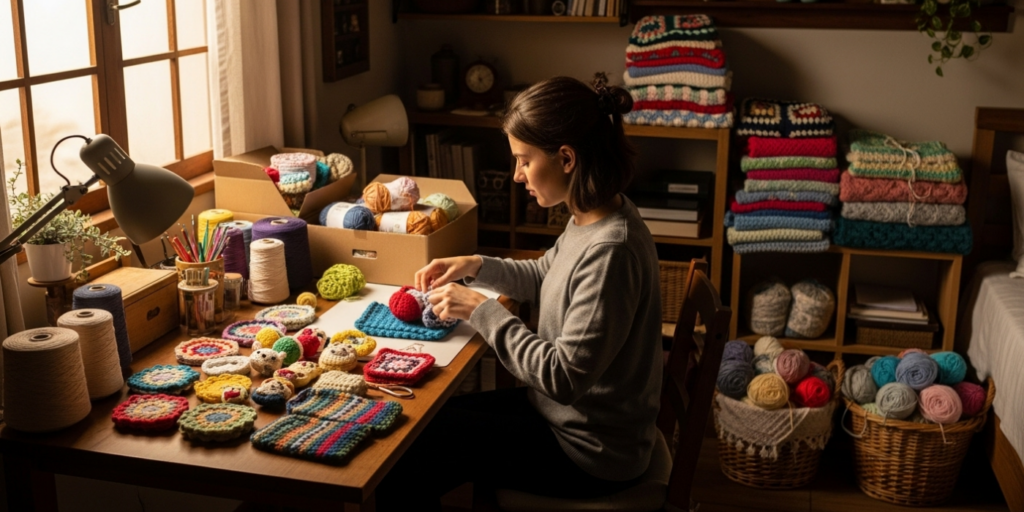
The handmade crochet community possesses unique characteristics that make wholesale opportunities particularly viable when priced correctly. Unlike mass-produced goods, crochet items carry inherent value through their artisanal nature, customization potential, and emotional resonance. Consumers increasingly seek authentic, small-batch products with stories behind them—qualities that wholesale retailers in boutique, gift shop, and lifestyle store segments actively curate. This creates natural alignment between skilled crochet designers and retailers serving discerning customers.
Experienced designers often recommend wholesale as a growth strategy because it provides predictable income streams compared to the volatility of direct sales. When you secure consistent wholesale accounts, you can plan production runs more efficiently, reduce per-unit costs through yarn buying in bulk, and stabilize cash flow. Additionally, the crochet community’s strong emphasis on craftsmanship and quality control means well-priced wholesale items maintain their perceived value even after retailer markup. In many crochet businesses I’ve consulted with, wholesale channels became the foundation for scaling because they leveraged the handmade premium while achieving volume impossible through individual sales alone. The key is recognizing that wholesale isn’t about discounting your work—it’s about creating a pricing structure that respects both your labor and the retailer’s need for margin, ultimately expanding your market reach without compromising sustainability.
Materials, Tools, and Resources Needed for Accurate Pricing
Before calculating wholesale prices, gather essential tools to ensure accuracy and consistency. You don’t need expensive software to start—many successful crochet entrepreneurs begin with simple, accessible resources:
- Spreadsheet application (Google Sheets or Microsoft Excel) for tracking costs and creating pricing templates
- Digital scale (accurate to 0.1 grams) for measuring yarn usage per item
- Time-tracking method (phone app or notebook) to log actual production hours
- Receipts and supplier invoices for all materials and business expenses
- Pricing calculator worksheet (many free templates available from handmade business educators)
- Competitor research notes documenting similar wholesale products in your niche
- Basic accounting knowledge or access to a small business accountant for tax implications
From working with multiple crochet brands, I’ve found that artisans who invest time in organized cost tracking from day one avoid the painful recalculations that often derail wholesale expansion later. One common oversight is failing to account for “hidden” costs like packaging materials, shipping supplies, and payment processing fees—all of which must factor into your wholesale price. Start building your pricing infrastructure before approaching buyers; retailers immediately recognize professionalism when you can confidently explain your price structure with documented calculations rather than arbitrary numbers.
Yarn Types and Fiber Considerations in Wholesale Pricing
The fibers you choose directly impact your cost structure and, consequently, your wholesale pricing strategy. Not all yarns carry equal value in the marketplace, and savvy pricing reflects these material differences transparently. When calculating costs for wholesale items, consider these fiber categories and their pricing implications:
Natural fibers (wool, cotton, alpaca, silk) typically command higher wholesale prices due to material costs and consumer perception of quality. For example, a beanie made with 100g of merino wool yarn costing $28 wholesale requires a significantly higher base price than one using $8 acrylic yarn. However, natural fibers also justify premium positioning with retailers targeting eco-conscious or luxury segments.
Synthetic fibers (acrylic, polyester) offer lower material costs but face market perception challenges. To price these items profitably for wholesale, emphasize design innovation, durability, or special features (like machine-washability) that add value beyond the fiber itself. Never compete solely on price with mass-produced synthetics—instead, highlight your handmade quality differential.
Blends and specialty yarns (bamboo-cotton, wool-nylon) occupy middle ground. Price these based on the dominant fiber’s cost plus any premium for unique properties like drape, sheen, or sustainability certifications. Always calculate yarn cost per item precisely: weigh your finished piece, subtract non-yarn elements (buttons, etc.), then multiply grams used by cost per gram of your yarn.
In many wholesale negotiations I’ve observed, designers who articulate their fiber choices confidently—”This scarf uses GOTS-certified organic cotton at $0.45/gram, contributing $18 to the material cost”—build immediate credibility with buyers. Remember that fiber choice affects not just your costs but also product longevity, care requirements, and target market alignment—all factors influencing what retailers will pay wholesale.
Skill Level Breakdown: Pricing Across Experience Tiers
Your technical proficiency influences production efficiency and, therefore, your labor cost calculations—but it shouldn’t dictate wholesale pricing tiers that devalue your work. Instead, use skill level awareness to optimize your processes while maintaining consistent pricing integrity:
Beginner crocheters often work slower and may use more yarn due to tension inconsistencies. Rather than lowering wholesale prices to compensate, focus on accurate time tracking: if a simple coaster takes you 45 minutes now but will eventually take 20 minutes with practice, price based on current realistic production time while actively working to improve efficiency. Never price below cost to “gain experience”—this establishes unsustainable expectations with buyers.
Intermediate artisans typically achieve consistent tension and reasonable speed. This is the ideal stage to systematize pricing: develop standard time allocations for common items (e.g., 2 hours for a medium beanie) and build small efficiency buffers into calculations. Intermediate makers often successfully wholesale accessories like headbands, dishcloths, and simple amigurumi by focusing on designs that balance aesthetic appeal with production efficiency.
Advanced designers command higher wholesale prices through complex techniques (tunisian crochet, intricate colorwork), original patterns, or signature styles that retailers can’t source elsewhere. However, even advanced work must justify its price through documented costs. A lace shawl requiring 15 hours of skilled labor deserves appropriate compensation, but present this transparently: “This piece involves 12 hours of specialized filet crochet technique at $25/hour labor rate, plus $35 in silk-blend yarn.”
Across all levels, wholesale pricing must reflect actual costs plus profit—not perceived skill value alone. Experienced designers often recommend building tiered collections: simpler items at accessible wholesale prices to attract new retailers, alongside premium pieces showcasing advanced techniques at higher price points for established accounts.
Step-by-Step Guide to Calculating Wholesale Prices
Accurate wholesale pricing requires moving beyond guesswork to a structured calculation method. Follow this detailed, field-tested process to determine profitable yet competitive wholesale prices for any crochet item:
Step 1: Calculate Material Cost Per Item
Weigh your finished item on a digital scale. Subtract weight of non-yarn components (buttons, zippers). Multiply remaining yarn weight in grams by your cost per gram. Example: Beanie weighs 120g total; 5g for pom-pom = 115g yarn used. Yarn cost $24 for 100g skein = $0.24/gram. Material cost = 115 × $0.24 = $27.60. Include all materials: stitch markers used during production, specialty hooks if consumed, and exact packaging costs (e.g., $0.35 for a branded sticker and cellophane sleeve).
Step 2: Determine Labor Cost Realistically
Track actual time to complete identical items three times, then average. Include all production phases: yarn winding, active crocheting, weaving ends, blocking, and quality checking. Never use “ideal” time—account for realistic interruptions. Multiply average hours by your target hourly wage. Crucially, your wage must cover not just stitching time but business sustainability: industry standards suggest $20–$35/hour for skilled handmade work when accounting for non-billable business hours (marketing, admin, design). Example: Beanie averages 2.5 hours production × $28/hour = $70 labor cost.
Step 3: Allocate Overhead Expenses
Overhead includes costs not tied to single items but essential for business operation: studio rent, utilities, insurance, website fees, accounting software, and equipment depreciation. Calculate monthly overhead, then determine overhead per item based on realistic monthly output. Example: $300 monthly overhead ÷ 60 items produced monthly = $5 overhead per item. For wholesale pricing accuracy, never omit overhead—this is where most artisans accidentally price below true cost.
Step 4: Compute Total Cost of Goods Sold (COGS)
Sum material cost, labor cost, and allocated overhead. Using our beanie example: $27.60 (materials) + $70 (labor) + $5 (overhead) = $102.60 COGS. This represents your absolute minimum wholesale price before profit.
Step 5: Apply Profit Margin Strategically
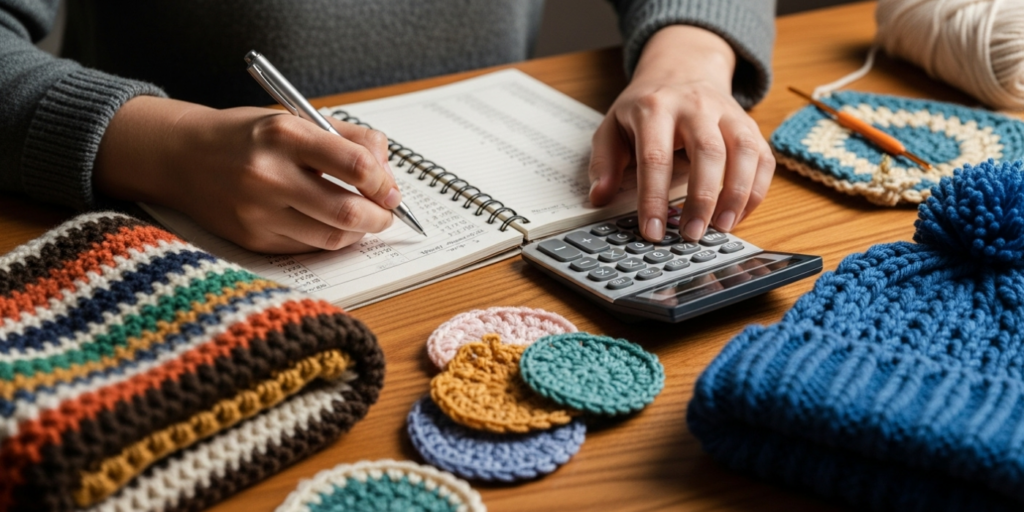
Wholesale profit margins typically range 15–30% for handmade goods. Lower margins may work for high-volume basics; higher margins suit limited editions or complex pieces. Calculate profit as percentage of COGS: 20% profit on $102.60 COGS = $20.52. Add to COGS: $102.60 + $20.52 = $123.12 wholesale price. Alternatively, use markup method: wholesale price = COGS ÷ (1 – desired profit margin). For 20% margin: $102.60 ÷ 0.80 = $128.25. Both methods work; consistency matters most.
Step 6: Validate Against Market Realities
Before finalizing, research comparable wholesale products. Contact 3–5 retailers in your target segment anonymously to ask typical wholesale ranges for similar items. If your calculated price falls significantly outside market norms, diagnose why: Are your labor rates unrealistically high? Can you optimize production? Never compromise below COGS to match competitors—instead, adjust business model (e.g., simplify designs for wholesale line while keeping complex pieces for direct retail).
Step 7: Build Pricing Tiers for Volume
Develop tiered wholesale pricing to incentivize larger orders without eroding margins: standard wholesale price for orders under 25 units; 5% discount at 25+ units; 10% at 50+ units. Crucially, ensure even discounted tiers maintain minimum 15% profit margin. Calculate volume discounts from your base wholesale price—not from an artificially inflated number.
This methodical approach transforms pricing from emotional guesswork into a business discipline. In my work with crochet brands, those adopting this seven-step process consistently secured wholesale accounts with healthier margins and greater longevity than peers using simplified formulas.
Common Mistakes and How to Avoid Them
Even experienced makers fall into pricing pitfalls that undermine wholesale profitability. Recognizing these errors early prevents costly corrections after buyer relationships are established:
Mistake 1: Using the “Retail Divided by Two” Formula Blindly
Many artisans assume wholesale price should be exactly half their retail price. This ignores whether the retail price itself accurately reflected true costs. If your retail price was already underpriced, halving it guarantees losses.
Solution: Always calculate wholesale price from COGS upward, then derive retail price as 2x wholesale (or higher for direct sales where you capture full margin).
Mistake 2: Undervaluing Labor Time
Assigning $10/hour labor rate because “it’s just a hobby” devalues your expertise and makes wholesale unsustainable. Buyers respect transparent, professional pricing that honors craftsmanship.
Solution: Research living wages in your region and industry standards for skilled handmade work. Start with $20/hour minimum if new to wholesale; adjust upward as efficiency improves.
Mistake 3: Ignoring Minimum Order Quantities (MOQs)
Offering wholesale without MOQs invites unprofitable micro-orders that consume disproportionate administrative time. A buyer ordering three items at wholesale price often costs more in processing than the sale generates.
Solution: Establish clear MOQs (e.g., 12 units per style) that ensure order values cover your handling costs. Communicate MOQs professionally on line sheets and in initial buyer conversations.
Mistake 4: Failing to Account for Payment Terms
Wholesale typically involves net-30 or net-60 payment terms, creating cash flow gaps. Pricing that covers production costs but ignores financing needs leads to strain when waiting for payment.
Solution: Factor financing costs into overhead or require partial deposits for first-time wholesale buyers. Build cash reserves equivalent to 2–3 months of production costs before pursuing wholesale aggressively.
Mistake 5: Inconsistent Pricing Across Channels
Selling identical items at different wholesale prices to various retailers damages trust and invites conflict. Similarly, undercutting your own wholesale partners with deep direct-sale discounts erodes relationships.
Solution: Maintain a single, transparent wholesale price list. If offering promotions, apply them equally across wholesale accounts or restrict deep discounts to distinct product lines not carried by retailers.
By avoiding these common errors, you position your crochet business as a reliable wholesale partner while protecting your financial sustainability—a combination that encourages retailers to build long-term relationships rather than treating you as a disposable vendor.
Advanced Tips and Professional Insights
Moving beyond basic pricing formulas, seasoned wholesale artisans employ nuanced strategies that maximize profitability while strengthening buyer relationships:
Implement Tiered Product Architecture
Develop distinct product lines with intentional pricing tiers: entry-level items (simple beanies, coasters) at accessible wholesale points ($15–$25) to attract new retailers; core collection pieces ($30–$60) representing your brand’s sweet spot; and statement items ($75+) for retailers seeking exclusive, high-margin products. This architecture allows retailers to build balanced orders while giving you flexibility in negotiations.
Negotiate Value-Adds Instead of Price Cuts
When buyers request discounts, counter with non-monetary concessions that preserve your margin: extended payment terms for larger orders, co-branded marketing support, or exclusive colorways for their store. From working with multiple crochet brands, I’ve seen designers maintain pricing integrity while closing deals by offering “value engineering”—slight design simplifications that reduce their costs without compromising aesthetics.
Build Seasonal Pricing Calendars
Plan wholesale pricing around production cycles and retail buying seasons. Offer early-order discounts for holiday collections placed by June (when you can source yarn at non-peak prices and spread production workload), but maintain standard pricing for last-minute orders that disrupt your workflow. This rewards planning while protecting against margin erosion during crunch times.
Track True Profitability Per Account
Not all wholesale buyers are equally profitable. Beyond item margins, calculate account profitability including: shipping costs, return rates, payment timeliness, and order frequency. One buyer ordering 200 units quarterly with prepaid shipping may yield higher net profit than five buyers each ordering 50 units with net-60 terms and frequent returns. Use this data to prioritize relationship-building with your most valuable partners.
Leverage Pricing Psychology
Wholesale buyers respond to psychological pricing cues. $24.50 wholesale feels more intentional and professional than $25.00; $49.00 wholesale (retailing at $98) tests better than $50.00 ($100 retail) for mid-tier boutiques. These subtle adjustments signal pricing expertise without materially affecting margins.
These advanced techniques separate sustainable wholesale businesses from those surviving on hope. They require meticulous record-keeping initially but compound into significant advantages as your wholesale channel matures.
Real-World Examples of Wholesale Pricing in Action
Concrete scenarios illustrate how theoretical pricing principles apply in actual wholesale contexts. These anonymized examples reflect patterns observed across successful crochet businesses:
Example 1: The Boutique Beanie Collection
A designer specializing in minimalist beanies calculated COGS at $18.50 per unit (including $6 yarn, $10 labor at $25/hour for 24 minutes average production, $2.50 overhead). Applying 25% profit margin yielded $24.63 wholesale price, rounded to $24.50. She presented three pricing tiers to retailers: standard $24.50 (MOQ 12 units), $23.25 at 24+ units, $22.00 at 48+ units—all maintaining minimum 20% margin even at highest discount. A regional boutique chain placed an initial order for 60 units across three colorways. The designer’s transparent cost breakdown during negotiation built trust, leading to quarterly reorders and eventual expansion into matching scarf designs.
Example 2: The Premium Amigurumi Line
An artist creating intricate animal amigurumi faced pricing challenges due to 8–12 hour production times per piece. Rather than undervaluing labor, she positioned pieces as collectible art: COGS averaged $85 (including $15 specialty yarns, $60 labor at $30/hour, $10 overhead). With 30% margin, wholesale landed at $121.43, rounded to $120. She targeted museum gift shops and high-end toy retailers rather than general boutiques, providing detailed artist statements and production photos to justify pricing. Though unit volume remained modest, average order value exceeded $1,500, and retailers appreciated the premium positioning that aligned with their customer expectations. Within 18 months, this focused approach generated more wholesale revenue than her previous attempts to price amigurumi at $45 wholesale for mainstream gift shops.
Example 3: The Seasonal Home Decor Range
A maker producing crochet pumpkins for autumn wholesale calculated COGS at $9.20 per unit. Initially pricing at $12 wholesale (30% margin), she discovered retailers expected lower price points for seasonal decor. Instead of cutting margin, she engineered costs downward: switched to cost-effective but quality-appropriate acrylic yarn ($3.50/unit material cost), optimized pattern to reduce production time to 15 minutes ($6.25 labor), maintained $1 overhead. New COGS: $10.75; wholesale at $14 (30% margin) remained profitable while meeting market expectations. This “value engineering” approach—adjusting design for wholesale viability without sacrificing quality—became her standard practice for seasonal lines.
These examples demonstrate that successful wholesale pricing isn’t about finding a universal formula but adapting principles to your specific products, target retailers, and business goals while never compromising below true cost.
Customization and Adaptation Ideas for Wholesale Pricing
Wholesale pricing shouldn’t be rigid—strategic flexibility allows you to serve diverse retail partners while protecting margins. Consider these adaptation approaches:
Product Customization for Specific Retailers
Develop exclusive color palettes, size ranges, or minor design variations for key wholesale accounts. Price these custom items 10–15% above standard wholesale to compensate for additional design time and smaller production runs. Retailers value exclusivity and often accept modest premiums for products their competitors can’t source.
Bundle Pricing Strategies
Create pre-configured bundles retailers can order as units: e.g., “Starter Set” of 4 coasters + 1 trivet wholesale priced 15% below individual item total. Bundles increase average order value while simplifying inventory management for retailers. Ensure bundle pricing still maintains minimum margins by calculating COGS for the entire set.
Geographic Pricing Adjustations
For international wholesale, factor in currency fluctuations and import complexities. Rather than maintaining identical USD pricing globally, develop region-specific wholesale sheets reflecting local market realities—but always anchor to your core COGS to avoid losses. Some designers maintain standard pricing but require international buyers to cover duties and taxes explicitly.
Seasonal and Promotional Adaptations
Plan limited-time wholesale promotions around slow retail periods (January, July) to move inventory without devaluing your brand. Offer “pre-season” pricing for orders placed 90+ days before holiday peaks, incentivizing early commitment that aids your production planning. Crucially, frame these as time-bound opportunities rather than permanent price reductions.
Adaptability within a disciplined pricing framework demonstrates business maturity to retailers. The most successful wholesale artisans I’ve worked with treat pricing as a dynamic tool—not a fixed number—while never abandoning their cost-based foundation.
Care, Maintenance, and Longevity Considerations in Pricing
While seemingly unrelated to pricing, product care requirements directly influence wholesale value perception and longevity—factors savvy retailers evaluate when selecting vendors. Items requiring complex care (hand-wash only, blocking after each wash) may face resistance from retailers serving convenience-oriented customers, potentially limiting wholesale appeal despite high craftsmanship.
When pricing wholesale items, consider these care-related value factors:
- Durability expectations: Machine-washable acrylic items may justify slightly lower wholesale prices than delicate lace pieces, but emphasize durability as a value-add for retailers targeting families or practical gift buyers.
- Care labeling costs: Factor the expense of custom care tags or printed instructions into your COGS—these small touches signal professionalism and reduce retailer burden.
- Longevity messaging: In line sheets, highlight how proper care extends product life (e.g., “With gentle hand-washing, this alpaca wrap maintains its softness for years”). This justifies premium pricing by framing items as long-term investments rather than disposable goods.
- Repair services: Some high-end crochet brands offer complimentary repair services for wholesale-sold items within one year. While adding operational complexity, this dramatically enhances perceived value and retailer confidence—potentially supporting 10–15% higher wholesale pricing.
From industry observations, wholesale buyers consistently favor vendors who proactively address care considerations. They recognize that products with clear, realistic care requirements generate fewer customer complaints and returns—ultimately protecting their own margins. By integrating care intelligence into your pricing strategy and product development, you position your crochet line as retail-ready rather than artisan-crafted-with-caveats.
Monetization Opportunities Beyond Basic Wholesale
While wholesale pricing forms the foundation, forward-thinking crochet businesses layer additional revenue streams that complement—rather than cannibalize—wholesale relationships:
Wholesale-Exclusive Designs
Develop specific patterns or colorways available only through wholesale channels. This protects retail partners from direct competition with your online store while creating perceived scarcity that encourages retailer commitment. Price these exclusives at standard wholesale rates but market them as partnership benefits.
Pattern Sales to Retailers
Some yarn shops and craft boutiques purchasing your finished goods also sell patterns. Offer wholesale pricing on printed patterns featuring your designs—creating a secondary revenue stream from the same creative work. Ensure pattern pricing ($8–$15 wholesale) doesn’t undermine finished item value.
Workshop Collaborations
Partner with wholesale retailers to host in-store crochet workshops using your designs. You earn teaching fees while retailers drive foot traffic and sell your wholesale items plus required materials. This symbiotic model strengthens relationships beyond transactional buying.
Limited Direct Sales Windows
Strategically time direct-to-consumer sales to avoid conflicting with wholesale seasons. Example: Offer “last chance” sales on discontinued wholesale colors exclusively through your website after retailers have received their seasonal shipments. Clear communication with wholesale partners about these planned promotions maintains trust.
Subscription Box Partnerships
Collaborate with established subscription services (e.g., craft or lifestyle boxes) as a wholesale vendor. These typically involve larger, scheduled orders at standard wholesale pricing but provide predictable volume and exposure to new audiences.
These layered approaches transform wholesale from a single revenue channel into an ecosystem where multiple streams reinforce each other. Crucially, all must operate within ethical boundaries that honor wholesale partnerships—never using direct sales to undercut retailers carrying your line. The most sustainable handmade businesses view wholesale not as an endpoint but as one component in a diversified monetization strategy.
Frequently Asked Questions About Crochet Wholesale Pricing
What is the standard wholesale discount off retail price?
Industry standard is 50% off retail (keystone pricing), meaning if your retail price is $40, wholesale would be $20. However, this only works if your retail price was calculated correctly from COGS upward. Never derive wholesale by halving an arbitrary retail number—always calculate wholesale from true costs first, then set retail at 2x wholesale or higher for direct sales.
How do I handle pricing when yarn costs fluctuate?
Build a yarn cost buffer into your pricing model: calculate based on current prices but add 5–10% contingency for fiber cost volatility. For long-term wholesale contracts, include a yarn cost adjustment clause allowing price revisions if material costs increase more than 15% within six months. Communicate proactively with buyers about necessary adjustments—professional retailers expect and respect transparent cost management.
Should I offer free shipping on wholesale orders?
Generally no—shipping costs should be separate line items to maintain pricing transparency. However, consider offering free shipping thresholds (e.g., orders over $500) that still preserve your margins. Always calculate actual shipping costs per order weight/dimensions rather than estimating; undercharging for shipping silently erodes profits.
What if a retailer demands pricing below my calculated wholesale cost?
Politely decline while explaining your cost-based pricing philosophy. Example: “I appreciate your interest, but my wholesale price of $28 reflects actual production costs plus a minimal margin required to sustain my business. I’d be happy to discuss volume discounts at higher order quantities that maintain quality standards.” Walking away from underpriced deals preserves your brand value and attracts retailers who respect handmade economics.
How often should I review and adjust wholesale prices?
Conduct formal pricing reviews quarterly during your first year of wholesale, then biannually once stabilized. Adjustments should reflect actual cost changes (yarn price increases, minimum wage adjustments) rather than arbitrary increases. Always provide wholesale partners 60–90 days’ notice before price changes on future orders, honoring existing purchase orders at original pricing.
Can I wholesale items I make from someone else’s pattern?
Only if the pattern designer explicitly grants commercial rights—many indie designers restrict wholesale use even when allowing small-scale sales. Always verify licensing terms before approaching retailers with items made from purchased patterns. For sustainable wholesale growth, develop original designs or secure written wholesale permissions from pattern creators to avoid legal complications and build your unique brand identity.
Conclusion
Pricing crochet items for wholesale opportunities demands equal parts mathematical precision and business intuition. By grounding your pricing in accurate cost calculations—materials, realistic labor valuation, and allocated overhead—you establish a foundation that supports both profitability and professional credibility. Remember that wholesale pricing isn’t about discounting your worth; it’s about creating a sustainable economic model where retailers can markup your work while you maintain healthy margins. The most successful crochet entrepreneurs treat pricing as an ongoing discipline, regularly refining their calculations as efficiency improves and market conditions evolve. Start with the step-by-step framework outlined here, track your numbers meticulously, and approach wholesale buyers with confidence rooted in transparent cost knowledge. When you price with integrity, you attract retailers who value craftsmanship and build partnerships that grow alongside your business. Your crochet skills deserve fair compensation—strategic wholesale pricing ensures those skills translate into a viable, enduring livelihood.

Anne Williams is a passionate crochet artist who finds purpose and expression through yarn and handmade creations. Driven by creativity and a love for the art of crochet, she transforms ideas into unique pieces, blending patience, care, and authenticity. Always eager to explore new techniques and inspire others, Anne believes crochet is a way to slow down, tell stories, and create beauty with meaning.