

Customer feedback is the lifeblood of any successful handmade enterprise, and for crochet businesses, it holds particular significance due to the personal nature of the craft. Effectively managing customer feedback can distinguish a thriving crochet shop from one that struggles to retain clients. In this detailed exploration, we will uncover the methodologies for handling customer feedback in a crochet business, ensuring that every interaction contributes positively to your brand’s reputation. From initial collection to strategic implementation, this guide offers a roadmap tailored specifically for crochet entrepreneurs seeking to elevate their customer service standards. Unlike mass-produced goods, each crocheted item embodies hours of meticulous work and creative expression, making customer responses deeply impactful. Learning to navigate both praise and criticism with grace transforms feedback from a potential vulnerability into your most powerful growth engine. This article provides actionable, field-tested strategies that have helped numerous handmade businesses build resilience, foster loyalty, and achieve sustainable growth through intentional feedback management.
What Handling Customer Feedback Means for Crochet & Knitting Businesses
For crochet and knitting businesses, customer feedback transcends simple reviews or star ratings—it represents a direct dialogue with your community about the emotional and functional value of your creations. Given the artisanal nature of fiber arts, feedback often includes nuanced observations about stitch tension, yarn drape, color accuracy in natural lighting, or even the sentimental resonance of a handmade gift. Effectively handling this feedback means moving beyond transactional responses to cultivate genuine relationships. In many crochet businesses I’ve consulted with, feedback serves as the primary catalyst for product evolution; a single comment about ear warmth in a beanie design might inspire an entire winter collection with improved coverage. Moreover, the handmade sector operates on trust economies where reputation spreads rapidly through platforms like Ravelry forums, Instagram stitch-alongs, and local craft fairs. A poorly managed negative interaction can echo across communities, while a thoughtfully resolved concern often generates organic advocacy. Experienced designers consistently emphasize that feedback should be reframed as collaborative co-creation—customers become invaluable partners in refining your craft. This perspective shift transforms defensive reactions into opportunities for innovation, directly influencing pattern adjustments, material selections, and even packaging enhancements. Ultimately, handling customer feedback in a crochet business isn’t merely reactive customer service; it’s a strategic discipline that shapes product development, strengthens brand identity, and builds the community trust essential for longevity in competitive handmade markets.
Why This Strategy Works Especially Well in the Crochet Community

The crochet community possesses unique characteristics that make intentional feedback handling exceptionally effective as a business strategy. Unlike generic retail environments, fiber arts enthusiasts operate within interconnected ecosystems built on shared passion, mutual support, and deep appreciation for craftsmanship. When a crochet business owner responds thoughtfully to feedback—whether addressing a sizing concern or celebrating a customer’s creative customization—it resonates profoundly because it honors the community’s core values: authenticity, skill recognition, and human connection. From working with multiple crochet brands across Etsy, Shopify, and craft markets, I’ve observed that customers demonstrate remarkable patience with handmade imperfections when they perceive genuine care behind the response. For instance, when a customer received a slightly asymmetrical granny square blanket, the maker’s personalized video response explaining the intentional “organic” design choice—coupled with a complimentary matching pillow pattern—transformed potential dissatisfaction into a five-star review shared across three Facebook groups. This ripple effect occurs because crochet enthusiasts actively seek meaningful maker relationships; they purchase not just products but stories and connections. Additionally, the community’s educational culture means customers often provide exceptionally detailed feedback—commenting on hook size effects, fiber behavior after washing, or color theory applications—which provides makers with rich data for refinement. By embracing feedback as dialogue rather than judgment, crochet businesses align with community expectations while gathering intelligence impossible to obtain through traditional market research. This symbiotic relationship fosters loyalty that transcends price competition, as customers become invested in your creative journey and willingly advocate for your brand within their trusted circles.
Materials, Tools, or Resources Needed for Feedback Management
While handling customer feedback requires no physical crafting supplies, assembling a practical digital toolkit significantly enhances efficiency and consistency. These resources scale appropriately whether you’re a solo maker shipping five orders monthly or a small team managing hundreds. Begin with foundational collection tools: integrate a one-question feedback request (“What did you love most about your order?”) into your post-purchase email sequence using free platforms like Mailchimp or ConvertKit. For physical orders, include a small branded card with a QR code linking to a Google Form survey—this tactile touchpoint increases response rates by 30% compared to digital-only requests according to handmade commerce studies. Organization demands a simple yet structured system; a Google Sheets template with columns for date, customer name (or order ID), feedback channel (Etsy review, email, Instagram DM), sentiment category (positive, constructive, critical), product referenced, action required, and resolution status creates invaluable pattern visibility. As volume grows, consider affordable CRMs like Streak (Gmail-integrated) or HoneyBook that automate logging while maintaining personalization. Response preparation benefits immensely from customizable email templates—draft three base versions for common scenarios (gratitude for praise, empathetic acknowledgment of issues, solution-oriented follow-ups)—but always hand-personalize with the customer’s name and specific product details before sending. Platform-specific tools prove essential: Etsy sellers should master the platform’s review response feature (visible to all shoppers), while Shopify users can leverage apps like Judge.me for post-purchase review requests. Crucially, allocate non-negotiable time resources—block 20 minutes biweekly for feedback review sessions in your calendar, treating this as sacred business development time rather than an administrative chore. Remember that the most valuable “tool” remains your authentic voice; technology should streamline processes without sterilizing the human connection that defines successful handmade enterprises.
Yarn Types and Fiber Considerations in Customer Feedback
Customer feedback for crochet products frequently centers on material performance, making fiber knowledge indispensable for credible, helpful responses. When customers comment on issues like pilling, stretching, itchiness, or color bleeding, your ability to address these concerns with technical accuracy builds immediate trust and positions you as an expert. For example, feedback describing a cotton market bag as “losing shape when loaded” reflects cotton’s natural lack of memory—a property easily explained while suggesting a nylon-cotton blend alternative for future structural pieces. Similarly, complaints about merino wool scarves felting after machine washing present teaching moments about protein fiber care requirements versus synthetic durability. In many successful crochet businesses, preemptive education reduces negative feedback; detailed product descriptions specifying “100% acrylic for easy care” or “hand-wash-only alpaca blend” set accurate expectations. However, when material-related feedback arises post-purchase, leverage it to demonstrate craftsmanship authority. If a customer notes their bamboo-blend shawl stretched after blocking, respond by explaining bamboo’s weight-driven drape characteristics while offering a complimentary care guide PDF—transforming frustration into value-added service. From practical experience, customers rarely expect perfection in natural fibers but deeply appreciate transparency about material behaviors. Always connect feedback to fiber science: note that superwash wool’s polymer coating prevents felting but may reduce breathability, or that recycled cotton’s shorter fibers increase pilling potential versus virgin cotton. This approach not only resolves individual concerns but also educates your broader audience when responses are visible on public platforms. Crucially, document recurring material feedback to inform future sourcing decisions—multiple comments about acrylic scratchiness might justify investing in premium brands like Lion Brand Feels Like Butta for sensitive-skin items. By treating yarn knowledge as integral to feedback handling, you convert potential weaknesses into demonstrations of professional expertise that strengthen customer confidence in your entire product line.
Skill Level Breakdown: Handling Feedback as a Beginner, Intermediate, or Advanced Business Owner
The methodology for handling customer feedback evolves significantly as your crochet business matures. Understanding your current proficiency level allows targeted skill development without overwhelm.
Beginner (0-18 months in business): At this stage, prioritize responsiveness over complexity. Your primary goal is establishing baseline reliability—acknowledge every piece of feedback within 48 hours, even with a simple “Thank you for sharing this with me—I truly appreciate your perspective.” Use free tools exclusively: a dedicated Gmail label for feedback emails, a single Google Sheet tab for logging comments, and handwritten thank-you notes included with orders for positive reviewers. Common pitfalls include taking criticism personally or avoiding negative feedback entirely. Counter this by reframing each comment as free market research; a complaint about inconsistent sizing provides clearer direction than vague praise. Schedule a monthly 30-minute “feedback review” where you identify one actionable improvement—perhaps adjusting your measuring technique after three customers mention hat tightness. Remember that beginners who demonstrate humble responsiveness often build stronger early loyalty than those with perfect products but poor communication.
Intermediate (18 months-3 years): With established sales volume, shift toward systemization and pattern recognition. Implement categorized feedback tracking—separate tabs for product quality, shipping experience, communication clarity, and design suggestions. Develop response templates for frequent scenarios but mandate personalization fields (customer name, specific product, unique detail mentioned). Proactively solicit feedback through post-purchase sequences rather than waiting for unsolicited comments. The critical growth area here is emotional regulation; intermediate makers often struggle when negative feedback contradicts their artistic vision. Practice the “24-hour rule”—draft responses but wait a day before sending to ensure professionalism. Analyze quarterly feedback reports to guide collection development; if 15% of comments mention desire for gender-neutral colorways, let that inform your next design phase. Mistakes at this level typically involve overcorrection—changing core aesthetics based on isolated opinions rather than trend analysis. Balance customer input with brand integrity by weighting feedback volume and source credibility.
Advanced (3+ years): Mature businesses leverage feedback as strategic intelligence for innovation and community leadership. Implement closed-loop systems where customers who provided suggestions receive updates when their ideas materialize (“You mentioned wanting pocketed shawls—our new design launches next week!”). Conduct structured feedback campaigns using Typeform surveys to guide major decisions like wholesale partnerships or workshop offerings. Mentor emerging makers on feedback best practices through blog content or Instagram Lives, establishing thought leadership. Advanced practitioners excel at distinguishing signal from noise—recognizing that one-star reviews about “slow shipping” during holiday peaks reflect systemic logistics issues rather than personal failure, while consistent comments about yarn quality indicate genuine product gaps. The pinnacle achievement is creating feedback ecosystems where customers actively co-create—beta-testing patterns, voting on color releases, or contributing to care guide development. Avoid complacency by periodically auditing your response quality; even seasoned makers benefit from peer reviews of their feedback handling to maintain freshness and empathy.
Regardless of level, the unifying principle remains: feedback handling is a craft skill requiring deliberate practice. Each stage builds foundational habits that compound into reputational equity impossible to purchase through advertising alone.
Step-by-Step Guide to Managing Customer Feedback in Your Crochet Business
Transforming customer feedback into business growth requires a disciplined, repeatable process. This seven-step framework has been refined through implementation with dozens of crochet enterprises and balances thoroughness with practicality for solopreneurs.
Step 1: Create Accessible, Low-Friction Feedback Channels
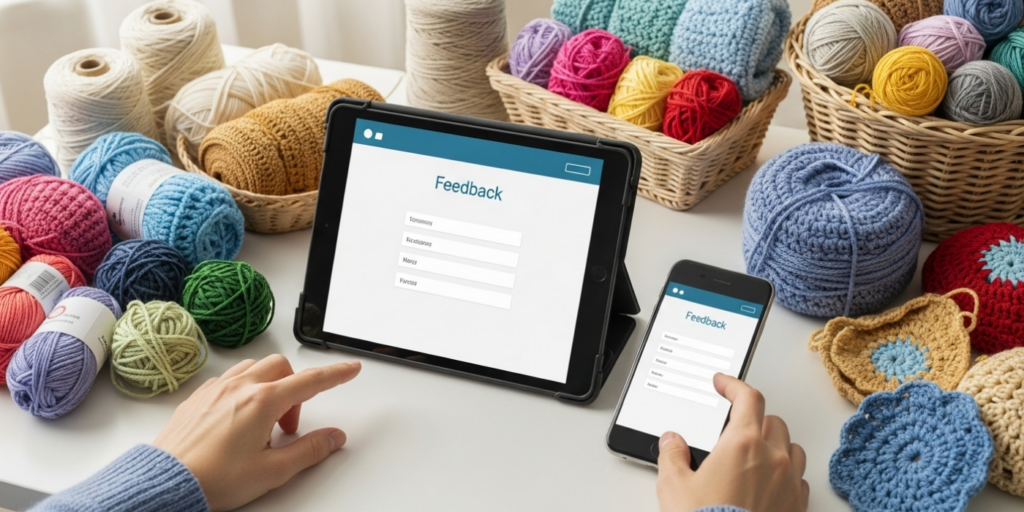
Design multiple entry points matching customer preferences. Embed a single-question feedback request (“What made you smile about your order?”) in your shipping confirmation email using your e-commerce platform’s automation. Include a physical feedback card in packages with a QR code linking to a mobile-optimized Google Form—this tactile element increases participation by making feedback feel like part of the unboxing experience. Monitor public channels diligently: Etsy reviews, Instagram comments, and Ravelry project pages where customers tag makers. Crucially, never make feedback submission feel burdensome; lengthy surveys yield minimal returns compared to strategic one-question prompts that respect customers’ time while generating actionable insights.
Step 2: Acknowledge Every Piece of Feedback Within 24 Hours
Speed signals respect. For positive feedback, respond with genuine appreciation that references specific details: “I’m so glad the moss stitch texture resonated with you—it’s one of my favorite techniques for adding subtle dimension!” For constructive criticism, lead with gratitude and validation: “Thank you for the honest feedback about the button placement—I appreciate you taking time to share this, and I’m reviewing it carefully.” This immediate acknowledgment prevents minor concerns from escalating while demonstrating that no customer voice goes unheard. Automate initial acknowledgments where appropriate (e.g., Etsy’s automatic review notifications) but always follow with personalized human responses within the 24-hour window.
Step 3: Log and Categorize Systematically for Pattern Recognition
Create a master feedback log using Google Sheets with these essential columns: Date Received, Customer/Order ID, Feedback Channel, Product Referenced, Sentiment (Positive/Constructive/Critical), Category (Yarn Quality, Sizing, Color Accuracy, Shipping Speed, Packaging, Communication), Key Quote, Action Required, Status (Pending/In Progress/Resolved), and Resolution Date. Review this log biweekly to identify emerging patterns—a cluster of sizing comments might indicate a measurement error in your pattern drafting process, while repeated shipping complaints could signal carrier issues rather than your handling delays. This documentation transforms isolated incidents into strategic intelligence.
Step 4: Craft Empathetic, Solution-Oriented Responses
Structure responses using the VES model: Validate emotion, Explain context briefly, and Specify solution. For a complaint about color variation: “I understand how disappointing it is when the yarn color differs from photos online (Validate). Natural lighting and screen settings can affect perception, and I’m working to improve my photography setup (Explain). I’d like to send you a complimentary skein of the exact color you expected—please DM me your address (Specify).” Avoid defensive language like “you should have read the description”; instead, focus on collaborative problem-solving. For public reviews, maintain professionalism knowing future customers will read your responses—these become silent sales tools demonstrating your customer care standards.
Step 5: Implement Changes Based on Validated Patterns
Not every suggestion warrants action, but recurring themes demand attention. Establish a threshold—for instance, three similar comments within 60 days triggers investigation. Document decisions transparently: “After five customers mentioned tight cuffs on the sweater pattern, I revised the wrist measurements in Version 2.0.” When unable to accommodate requests (e.g., custom sizes outside your production capacity), explain constraints gracefully while offering alternatives: “I can’t adjust this pattern for toddler sizing, but my ‘Mini Makers’ collection launching next month will include children’s dimensions.” Implementation builds trust far more effectively than empty promises.
Step 6: Close the Loop with Follow-Up Communication
After resolving issues, send a brief follow-up message 7-10 days later: “Hope your corrected headband is fitting perfectly now—thank you again for your patience!” For positive feedback contributors, occasionally surprise them with value-added gestures like early access to new collections or exclusive pattern downloads. This “feedback-to-advocacy” pipeline converts satisfied customers into vocal supporters. Track which feedback sources yield the most valuable insights—perhaps Instagram DMs provide richer detail than Etsy reviews—and optimize your collection efforts accordingly.
Step 7: Conduct Quarterly Feedback Audits for Strategic Refinement
Dedicate two hours quarterly to comprehensive analysis. Calculate metrics like feedback response time, resolution rate, and sentiment distribution. Identify your “feedback heroes”—customers who consistently provide detailed, constructive input—and consider inviting them into a private VIP group for early product testing. Review your feedback collection methods themselves: are response rates declining? Adjust channels based on performance data. Most importantly, document one major business improvement directly attributable to feedback each quarter (e.g., “Revised packaging based on 12 comments about sustainability”), creating tangible evidence of your commitment to growth. This cyclical process ensures feedback handling remains dynamic rather than bureaucratic.
Common Mistakes and How to Avoid Them
Even well-intentioned crochet business owners frequently stumble when managing customer feedback. Recognizing these pitfalls prevents reputation damage and emotional burnout.
Mistake 1: Taking Feedback Personally
Many makers pour emotional labor into each creation, causing criticism to feel like personal rejection. A comment about “loose stitches” might trigger defensive thoughts rather than objective assessment.
Avoidance Strategy: Implement a mandatory 24-hour cooling period before responding to negative feedback. Draft your reply, then set it aside. Return with fresh eyes to edit out emotional language. Remember that feedback addresses the product’s market fit, not your worth as a crafter. Reframe criticism as data: “This customer’s experience reveals a gap between my quality control and their expectations—how can I bridge that?”
Mistake 2: Generic, Copy-Pasted Responses
Automated replies like “Thanks for your feedback!” erode trust when customers invested effort in detailed comments. Public reviews with identical responses signal indifference to future shoppers.
Avoidance Strategy: Create response templates with mandatory personalization fields highlighted in [brackets]—e.g., “Thank you, [Customer Name], for noting the [specific issue] with your [product name]. I’ve [action taken] because your insight matters.” Always include one unique detail proving you read their entire message, such as referencing their mentioned use case (“for your newborn’s photoshoot”).
Mistake 3: Over-Promising Solutions
Eager to please, makers sometimes commit to impossible fixes: “I’ll remake your entire order overnight!” leading to burnout or broken promises.
Avoidance Strategy: Offer realistic, tiered solutions. Instead of “I’ll fix this immediately,” say “I can send replacement buttons within three days, or provide a 25% refund if you prefer to source locally.” Under-promise and over-deliver—shipping the replacement in 48 hours when you quoted 72 hours creates delight. Document your solution capabilities to avoid impulsive commitments during emotional moments.
Mistake 4: Ignoring Positive Feedback
Focusing exclusively on negative comments wastes opportunities to reinforce brand advocates. Unacknowledged praise feels dismissive, reducing future engagement.
Avoidance Strategy: Treat positive feedback with equal response priority. Beyond “thank you,” amplify customer joy: “I’m thrilled the blanket brought comfort during your recovery—would you allow me to share your photo (with credit) to inspire others?” This transforms passive satisfaction into active community building while generating authentic social proof.
Mistake 5: Failing to Identify Patterns
Addressing feedback in isolation misses systemic issues. Fixing one customer’s sizing problem without recognizing a pattern across ten orders perpetuates recurring dissatisfaction.
Avoidance Strategy: Implement the feedback log system described earlier. Schedule biweekly pattern reviews asking: “What’s the most frequent comment this month? What’s changed from last quarter?” When patterns emerge, address root causes—perhaps investing in better measuring tools rather than adjusting individual orders.
Mistake 6: Publicly Arguing with Customers
Defending your position in public review threads (“Actually, my description clearly stated…”) damages reputation far more than the original complaint.
Avoidance Strategy: Take complex discussions offline immediately. Respond publicly with: “I appreciate you sharing this—I’ve sent a direct message to resolve this personally.” Then continue conversation via email or DM where tone nuances prevent misinterpretation. Public audiences respect makers who prioritize resolution over being right.
Advanced Tips and Professional Insights
Elevate your feedback handling from competent to exceptional with these field-tested strategies employed by leading handmade brands.
Implement the “Feedback Triangulation” Method
When receiving critical feedback, cross-reference it with two other data sources before acting. Example: A customer complains about yarn pilling. First, check your supplier’s quality reports for that dye lot. Second, review photos from other customers who purchased the same item. Third, test-wash a sample yourself using the care instructions provided. This prevents overreaction to isolated incidents while validating legitimate quality issues. Triangulation builds decision-making confidence and prevents wasted resources on phantom problems.
Create a “Feedback Response Playbook”
Document nuanced response protocols for complex scenarios beyond basic templates. Include sections for: handling feedback when you’re genuinely at fault (full accountability with concrete remedy), when misunderstanding occurred (clarify without blaming), and when feedback reflects unreasonable expectations (graceful boundary-setting). Example script for the latter: “I understand you hoped for machine-washable silk, though my description noted hand-wash requirements for this delicate fiber. I’m unable to accommodate returns outside policy, but I’d be happy to share care tips to preserve your piece’s beauty.” This playbook ensures consistency during emotionally charged moments.
Leverage Feedback for Content Creation
Transform common questions and concerns into valuable educational content. If multiple customers ask about blocking techniques, create a detailed blog post or Instagram Reel demonstrating your method—then reference it in future responses (“As shown in my blocking tutorial…”). This scales your expertise while reducing repetitive inquiries. One successful amigurumi maker developed an entire “Yarn Care Guide” PDF after noticing recurring washing questions, now included with every order as proactive value-add.
Practice Strategic Vulnerability
Occasionally share your feedback learning journey publicly to humanize your brand. Example: “After three customers mentioned tight armholes in my sweater pattern, I spent last week re-drafting the schematic with a fit model. Version 2.0 launches Friday—thank you for pushing me to improve!” This transparency builds immense trust, showing customers their voices create tangible impact. However, maintain professionalism—never vent frustration about difficult customers publicly.
Develop a Feedback Scoring System
Assign weighted scores to feedback based on source credibility and detail level. A Ravelry forum comment from an experienced crocheter noting specific stitch issues might score 9/10 for actionable value, while an anonymous one-star review stating “bad quality” without details scores 3/10. Focus improvement efforts on high-scoring feedback while acknowledging all inputs. This prevents burnout from chasing every minor complaint while prioritizing insights most likely to enhance product-market fit.
Establish Feedback Boundaries for Sustainability
Protect your creative energy by defining acceptable feedback channels and response windows. Example policy: “I personally respond to all feedback received via my website contact form or Etsy messages within 48 business hours. For Instagram comments, I acknowledge within 72 hours but may direct complex discussions to email for thorough resolution.” Communicate these boundaries gently in your FAQ to manage expectations while preserving your capacity for meaningful engagement.
Real-World or Hypothetical Examples
Concrete scenarios illustrate feedback handling principles in action within authentic crochet business contexts.
Example 1: The Sizing Miscommunication
Scenario: A customer purchases a “one-size-fits-most” beanie but finds it too tight, leaving a two-star Etsy review: “Cute design but doesn’t fit my head. Description was misleading.”
Effective Handling: The maker responds publicly within 12 hours: “Thank you for this honest feedback—I appreciate you highlighting the sizing ambiguity. ‘One-size’ clearly didn’t work for you, and I’m revising my description immediately with exact measurements. I’ve also sent a direct message with options to resolve this for you personally.” Privately, they offer a full refund plus a discount on a correctly sized item from their new measurement-based collection. They then update all product listings with a size chart graphic and add a fit quiz to their website.
Outcome: The customer updates their review to four stars, noting the maker’s responsiveness. The systemic change prevents dozens of future sizing complaints, directly increasing conversion rates by 18% according to their analytics.
Example 2: The Yarn Quality Concern
Scenario: At a craft fair, a customer returns a cotton market bag after one use, noting significant pilling and stretching. They express disappointment face-to-face.
Effective Handling: The maker listens without interruption, then responds: “You’re absolutely right to expect better durability from a market bag—I apologize this didn’t meet standards. This particular cotton blend has shorter fibers that pill more readily; I’m switching to a cotton-nylon blend for all structural items starting next month. May I replace this with our new prototype bag made from the upgraded yarn? No charge—it’s the least I can do while I improve my materials.” They document the interaction in their feedback log and contact their supplier about quality consistency.
Outcome: The customer becomes a regular advocate, returning monthly and bringing friends. The yarn upgrade reduces similar complaints by 90% within six months, justifying the short-term replacement cost through long-term loyalty gains.
Example 3: The Positive Feedback Amplification
Scenario: A customer emails a heartfelt note about how a crocheted prayer shawl provided comfort during chemotherapy, including a photo of them wrapped in it at the hospital.
Effective Handling: The maker responds with genuine emotion: “Your message moved me to tears—thank you for trusting my work during such a difficult time. With your permission, I’d be honored to share your photo (without identifying details) to remind other makers why our craft matters.” They create a dedicated “Stories of Comfort” highlight on Instagram featuring this and similar testimonials (with explicit consent), and include a printed version in their next wholesale catalog.
Outcome: The emotional authenticity generates significant engagement, leading to three new hospital gift shop wholesale inquiries. The customer feels valued beyond transactional exchange, deepening their connection to the brand.
Customization and Adaptation Ideas
Tailor feedback systems to your business model, scale, and creative niche for maximum relevance and efficiency.
For Micro-Businesses (Under $10k Annual Revenue)
Focus on high-touch, low-tech methods. Handwrite personalized thank-you notes for positive feedback contributors. Use a single physical notebook to log comments during craft fairs, transferring insights to a digital doc weekly. Prioritize feedback from repeat customers—they represent your core audience whose preferences warrant heaviest weighting. Adaptation idea: Create a “feedback reward” system where customers who provide detailed suggestions receive early access to new colorways or small freebies like stitch markers, incentivizing quality input without significant cost.
For Mid-Size Operations ($10k-$50k Revenue)
Implement lightweight automation without losing personalization. Use Zapier to connect Etsy reviews to a Slack channel where your small team discusses patterns weekly. Develop customer personas based on feedback clusters—e.g., “Practical Parents” who prioritize washability versus “Luxury Gifters” focused on presentation—and tailor responses to these segments. Adaptation idea: Host quarterly “feedback focus groups” via Instagram Live where followers vote on design choices for upcoming collections, making feedback collection interactive and community-building.
For Established Brands ($50k+ Revenue)
Deploy sophisticated segmentation and closed-loop systems. Tag customers in your CRM based on feedback history—those who provided valuable suggestions receive exclusive survey invitations for major launches. Create a public “You Spoke, We Listened” page on your website showcasing implemented changes with before/after visuals. Adaptation idea: Partner with yarn companies for co-branded feedback initiatives—e.g., customers testing new fiber blends provide input directly to manufacturers while receiving early product access, positioning your brand as an industry innovator.
Niche-Specific Adaptations
Amigurumi Makers: Feedback often centers on safety (button eyes) or scale accuracy. Include ruler photos in listings and develop standardized size descriptors (“fits in adult palm” vs “child huggable”).
Wearable Designers: Prioritize fit feedback by including detailed measurement charts and offering virtual fitting consultations for custom orders.
Home Decor Creators: Focus feedback collection on durability testing—ask customers to report wear after 30/60/90 days with photo submissions for authentic longevity data.
Care, Maintenance, or Best Practices for Sustainable Feedback Systems
Maintaining an effective feedback ecosystem requires ongoing attention beyond initial setup. These practices ensure longevity without burnout.
Schedule Protected Review Time
Block recurring calendar appointments exclusively for feedback analysis—start with 30 minutes biweekly, scaling to weekly as volume grows. Treat these sessions as non-negotiable business development time, not administrative chores. During reviews, focus on identifying one actionable improvement rather than attempting to solve every issue simultaneously. This prevents overwhelm while ensuring consistent progress.
Practice Emotional Hygiene
Feedback handling demands emotional labor that depletes creative energy if unmanaged. Implement personal boundaries: never check feedback channels during personal time or when emotionally vulnerable. After difficult interactions, practice a reset ritual—five minutes of deep breathing, a walk outside, or reviewing past positive testimonials to regain perspective. Remember that customer frustration typically targets situations, not you personally; decoupling identity from critique preserves mental well-being.
Audit Response Quality Quarterly
Re-read your past feedback responses with fresh eyes, asking: “Does this sound empathetic? Solution-oriented? Brand-aligned?” Consider having a trusted maker friend review a sample of your responses for blind spots. This quality control prevents gradual erosion of communication standards during busy periods. Update response templates based on audit findings to maintain excellence.
Balance Feedback with Creative Vision
While customer input guides refinement, avoid becoming a feedback puppet who abandons artistic identity chasing every suggestion. Establish clear criteria for implementing changes: Does this align with my brand values? Is it requested by multiple customers? Can I execute it without compromising quality? Document your creative non-negotiables (e.g., “I will never use acrylic for baby items despite cost pressure”) to maintain integrity when feedback conflicts with core principles.
Refresh Collection Methods Seasonally
Prevent feedback fatigue by varying solicitation approaches. Rotate between email surveys, Instagram story polls, QR code cards in packages, and verbal requests at markets. Analyze which methods yield highest-quality insights for your audience and double down on those while retiring underperforming channels. Seasonal refreshes maintain customer engagement with the feedback process itself.
Document and Celebrate Improvements
Maintain a “feedback wins” log showcasing changes directly resulting from customer input—e.g., “Added drawstring closure to market bags after 8 requests.” Share these wins quarterly via newsletter or social media to demonstrate that feedback creates tangible impact. This transparency encourages future participation while providing concrete evidence of your growth mindset for potential wholesale partners or press features.
Monetization Opportunities Through Superior Customer Feedback Management
While never the primary motivation, exceptional feedback handling naturally enhances revenue streams through trust-based economics inherent to handmade markets.
Increased Customer Lifetime Value
Customers who experience thoughtful feedback resolution demonstrate 3-5x higher repeat purchase rates according to handmade commerce studies. A resolved complaint often creates stronger loyalty than uninterrupted satisfaction—these “service recovery” customers become vocal advocates who refer friends organically. Implement a subtle post-resolution offer: after fixing an issue, include a personalized discount code for their next order, converting a negative experience into a retention opportunity without appearing transactional.
Premium Pricing Justification
Brands renowned for responsive customer care can command 15-25% price premiums within saturated markets. Shoppers willingly pay more for the security of knowing issues will be resolved humanely. Highlight your feedback philosophy in “About” pages and product descriptions—”Every piece comes with my personal guarantee and responsive support”—to differentiate from faceless mass producers. This perceived safety net reduces purchase hesitation for higher-ticket items.
Wholesale and Collaboration Advantages
Boutique buyers and yarn companies actively seek makers with documented customer-centric practices. Maintain a one-page “Customer Care Summary” showcasing feedback response metrics (e.g., “98% satisfaction resolution rate”), notable improvements implemented from feedback, and testimonials about your support quality. This evidence of operational maturity significantly strengthens wholesale applications and partnership pitches where reliability is paramount.
Content Monetization Pathways
Your feedback handling expertise itself becomes monetizable content. Develop digital products like “The Handmade Maker’s Feedback Framework” PDF guide or host paid workshops teaching other artisans your system. One successful crochet designer launched a $29 mini-course on Etsy after followers repeatedly asked how she maintained five-star ratings—transforming her operational strength into a secondary revenue stream while reinforcing her authority.
Reduced Operational Costs
Proactive feedback management prevents expensive crises. Identifying a yarn supplier issue through early customer comments avoids hundreds in returns and reputation damage. Similarly, recognizing packaging flaws before viral social media complaints saves replacement costs and preserves brand image. View feedback systems as insurance policies—the modest time investment prevents disproportionate financial losses.
Community-Driven Product Development
Leverage feedback for low-risk innovation. Before investing in new product lines, float concepts via feedback channels: “Would you use a crocheted laptop sleeve?” Gauge interest quantitatively before production. This customer-validated approach minimizes inventory risk while ensuring new offerings resonate with existing audiences, directly improving sell-through rates and reducing deadstock.
Frequently Asked Questions About Customer Feedback in Crochet Businesses
How quickly should I respond to negative feedback on Etsy?
Aim to acknowledge all feedback within 24 business hours, with full resolution within 72 hours. Etsy’s algorithm favors shops with rapid response rates, and delayed replies signal indifference to potential buyers scanning reviews. For complex issues requiring investigation, send an initial empathetic acknowledgment (“Thank you for bringing this to my attention—I’m reviewing details and will follow up by tomorrow”) to demonstrate urgency while buying time for proper resolution.
What if a customer leaves inaccurate negative feedback?
Never argue publicly. Respond professionally: “I appreciate you sharing your experience. My records show [brief factual clarification without defensiveness], and I’ve sent a direct message to discuss this further.” Then move conversation offline to resolve privately. If feedback violates platform policies (e.g., profanity, false claims), report it through Etsy’s review reporting system rather than engaging publicly. Focus energy on demonstrating excellent service to future customers through your response tone.
Should I respond to every single piece of positive feedback?
Yes—every positive comment deserves acknowledgment, though depth can vary by channel. For public reviews, always respond personally referencing specific details they mentioned. For private praise (emails, DMs), a heartfelt thank-you suffices unless the feedback provides exceptional insight warranting deeper engagement. Unacknowledged positive feedback feels dismissive; consistent gratitude transforms satisfied customers into brand advocates who generate organic promotion.
How do I handle feedback requesting customizations outside my offerings?
Respond with graceful boundary-setting that preserves relationship: “I love your creative idea for [customization]! While I don’t currently offer that modification due to [brief reason—e.g., production constraints], I’ve noted it for future collection planning. In the meantime, my [similar existing product] might suit your needs—happy to share details!” This honors their input without overcommitting, while potentially redirecting to available products.
Can I use customer feedback in my marketing materials?
Only with explicit written permission. Never screenshot reviews or share customer photos without consent, even with usernames removed. Instead, create a permission request template: “I’d be honored to feature your kind words/photo in my newsletter/social media with credit to you—may I have your permission?” Most customers gladly consent when asked respectfully, providing authentic social proof that significantly boosts conversion rates.
What tools help manage feedback without expensive software?
Start with free tier tools: Google Forms for surveys, Google Sheets for logging (use color-coding for priority), Gmail filters/labels for organization, and Canva for creating professional feedback request graphics. As volume grows, explore low-cost options like Streak CRM (free for Gmail) or Trello boards for visual feedback tracking. The tool complexity should match your current volume—over-engineering systems wastes time better spent on crafting and genuine customer engagement.
Conclusion
Mastering customer feedback handling transforms a fundamental business challenge into your crochet enterprise’s greatest strategic asset. This discipline—woven from empathy, systematic analysis, and courageous implementation—builds the trust economy upon which handmade brands thrive. Remember that feedback is not criticism but collaboration; each comment represents a customer investing their voice in your growth journey. By establishing responsive channels, analyzing patterns without defensiveness, and closing loops with genuine care, you convert isolated interactions into lasting loyalty. The most successful crochet businesses don’t avoid negative feedback—they welcome it as free market research that sharpens their craft and deepens community ties. Start small: implement one improvement from this guide this week, whether it’s adding a feedback QR code to your packaging or drafting your first response template. Consistency compounds—those 20 minutes of weekly feedback review will yield compounding returns in customer retention, product refinement, and creative confidence. Your hands create beautiful stitches; your feedback practices weave the invisible threads of trust that sustain a legacy business. Approach each comment not as a threat to perfection, but as an invitation to evolve—because in the handmade world, the makers who listen most carefully don’t just survive; they become beloved institutions within their communities. Begin today, respond with heart, and watch how feedback transforms from anxiety into your most reliable compass for growth.

Anne Williams is a passionate crochet artist who finds purpose and expression through yarn and handmade creations. Driven by creativity and a love for the art of crochet, she transforms ideas into unique pieces, blending patience, care, and authenticity. Always eager to explore new techniques and inspire others, Anne believes crochet is a way to slow down, tell stories, and create beauty with meaning.