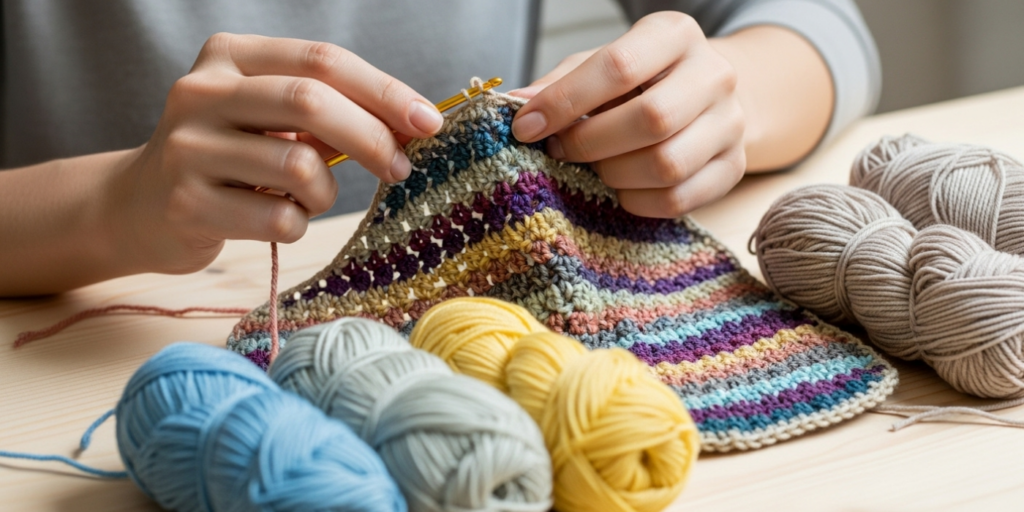
Crochet pattern repeats form the essential framework that allows crocheters to create intricate designs with consistency and precision. Mastering stitch counts and understanding how pattern repeats function is not just a technical skill—it’s the foundation of professional-quality work. In this complete guide, we will explore every aspect of crochet pattern repeats and stitch counts, from basic concepts to advanced applications. Whether you’re designing your own patterns or following existing ones, this knowledge will transform your crochet projects. Accurate management of repeats ensures that motifs align correctly, edges remain straight, and the overall drape and fit of garments meet expectations. For beginners, this might seem daunting, but with practice and the right guidance, it becomes second nature. Experienced crocheters often revisit these fundamentals to troubleshoot issues or innovate new designs. The importance of this topic cannot be overstated; it bridges the gap between hobbyist crafting and professional artistry. Throughout this article, we will delve into practical strategies, common pitfalls, and expert insights to empower you with confidence in your crochet journey. By the end, you’ll have a comprehensive understanding that applies to everything from simple scarves to complex lace shawls.
What Crochet Pattern Repeats Mean for Crochet & Knitting Businesses
For businesses operating in the handmade and craft sector, the precision of crochet pattern repeats and stitch counts directly impacts product quality, customer satisfaction, and brand reputation. When selling finished items, inconsistent stitch counts can result in garments that are too tight, too loose, or asymmetrical, leading to customer dissatisfaction and increased return rates. From working with multiple crochet brands, I’ve observed that businesses investing in thorough pattern testing and clear instructions experience fewer customer service issues and higher repeat purchase rates. Pattern designers, in particular, must excel in communicating repeat structures and required stitch multiples; a single error in a published pattern can lead to widespread confusion and damage credibility. Moreover, understanding how to calculate and adjust stitch counts allows businesses to offer size-inclusive patterns, catering to a broader audience and tapping into the growing demand for customizable fashion. This expertise also facilitates efficient production; for instance, knowing the exact stitch count per row can optimize yarn usage, reducing material costs. In educational ventures, such as workshops or online courses, teaching these concepts builds trust and positions the brand as an authority. Ultimately, mastery of crochet pattern repeats is a competitive advantage that enhances professionalism and profitability across the handmade industry. Businesses that document their repeat methodologies in pattern support materials often see reduced refund requests and increased positive reviews, directly influencing long-term sustainability.
Why Crochet Pattern Repeats Work Especially Well in the Crochet Community
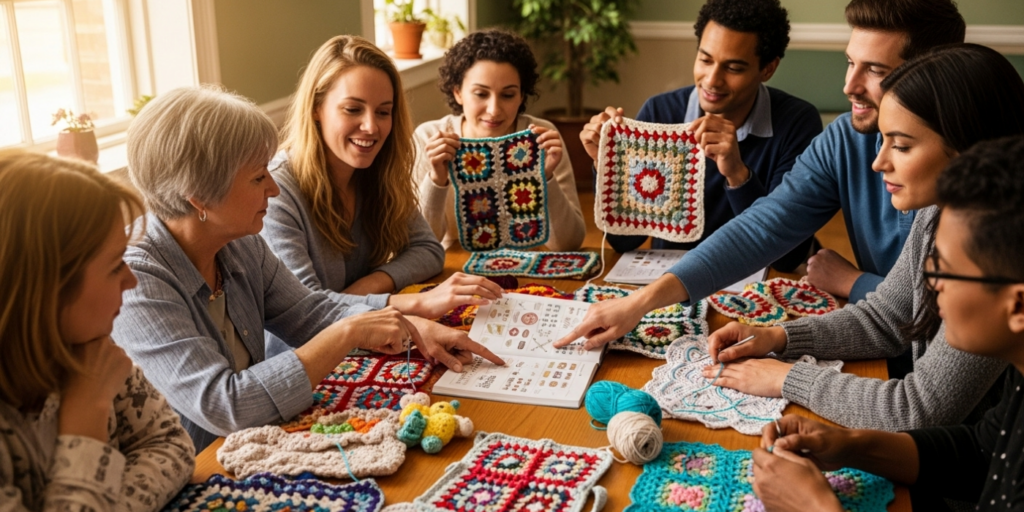
The crochet community thrives on shared knowledge, collaboration, and a passion for craftsmanship. Understanding crochet pattern repeats and stitch counts resonates deeply within this culture because it empowers individuals to not only follow patterns but also to adapt, modify, and create their own designs. Unlike some crafts that rely heavily on rigid templates, crochet offers flexibility through its repeat-based structures, encouraging creativity within a framework of consistency. This balance appeals to crocheters of all levels, fostering a sense of accomplishment when they successfully execute a complex repeat or troubleshoot a counting error. Online platforms like Ravelry, Instagram, and dedicated forums buzz with discussions about pattern repeats, where members exchange tips, share swatches, and celebrate breakthroughs. This communal learning environment accelerates skill development and builds strong networks. Additionally, the tactile nature of crochet—feeling the rhythm of repeats—creates a meditative experience that many find therapeutic, further strengthening community bonds. Businesses that engage with this aspect, such as by hosting stitch-alongs focused on mastering repeats, often see heightened engagement and loyalty. The strategy works because it aligns with core values of the crochet community: education, empowerment, and artistic expression. When a new crocheter learns how to identify a pattern repeat in a lace motif, they gain the confidence to tackle more ambitious projects, which they then share online, inspiring others. This ripple effect amplifies the reach of quality content and reinforces positive practices. Experienced designers often leverage this by including detailed repeat explanations in their patterns, knowing that clarity fosters community trust. In essence, the focus on pattern repeats serves as a unifying thread that connects beginners to experts, hobbyists to professionals, and individuals to a global network of makers.
Materials, Tools, or Resources Needed
To effectively work with crochet pattern repeats and stitch counts, having the right materials and tools is essential. While the core requirement is simply a hook and yarn, additional resources can significantly enhance accuracy and efficiency. A set of stitch markers is indispensable for marking the beginning of rounds, identifying repeat sections, or highlighting specific stitches within a pattern. These can be simple plastic rings or more elaborate locking markers for complex projects. A row counter, either manual or digital, helps track the number of rows or repeats completed, preventing miscounts during long sessions. For precise stitch counting, a tapestry needle or a small crochet hook in a contrasting color can be used to poke through stitches for visual confirmation. Good lighting and a comfortable workspace reduce eye strain and fatigue, which are common causes of counting errors. Digital tools, such as spreadsheet apps or dedicated crochet software, allow for creating charts and tracking stitch counts electronically. Many experienced crocheters also keep a dedicated notebook for swatching and recording gauge measurements, which is crucial for understanding how stitch counts translate to finished dimensions. Investing in quality tools not only improves the crocheting experience but also minimizes frustration and maximizes the likelihood of project success. Additionally, resources like printed pattern books with clear diagrams, online video tutorials demonstrating repeat techniques, and community forums for troubleshooting provide invaluable support. For businesses, maintaining an inventory of standardized tools ensures consistency across production teams. Beginners should start with basic supplies and gradually incorporate advanced tools as their skills develop. Remember, the goal is not to accumulate gadgets but to use tools that genuinely aid in mastering the fundamentals of pattern repeats and stitch counts.
Yarn Types and Fiber Considerations
The choice of yarn significantly influences stitch counts and the behavior of pattern repeats. Different fiber contents and yarn weights affect gauge, drape, and elasticity, which in turn impact how repeats manifest in the finished fabric. For instance, a cotton yarn, with its minimal stretch, requires precise stitch counts to maintain shape, whereas wool’s natural elasticity can forgive minor counting errors but may distort if tension varies. When working with pattern repeats, it’s crucial to consider yarn weight; a bulky yarn will have fewer stitches per inch than a fingering weight, altering the number of repeats needed for a given width. Fiber characteristics also play a role: slippery fibers like silk may cause stitches to shift, making it harder to maintain consistent counts, while textured yarns like bouclé can obscure stitch definition, complicating counting. In my experience with various yarn brands, swatching with the intended yarn before starting a project is non-negotiable for accurate results. This practice allows crocheters to adjust hook size or stitch count to achieve the desired gauge. Moreover, dye lots and color variations can affect visibility of repeats, especially in variegated yarns where pattern motifs might blend together. For businesses, specifying recommended yarns in patterns helps customers replicate intended outcomes. Understanding these nuances ensures that pattern repeats perform as designed, regardless of material choices. Consider also how fiber care impacts long-term stitch integrity; for example, acrylic yarns may pill over time, altering the appearance of repeats, while natural fibers like linen soften with washing, potentially changing drape. Always account for these factors when designing or adapting patterns to ensure durability and satisfaction. A merino wool blend might showcase cable repeats beautifully due to its stitch definition, whereas a mohair blend could soften lace repeats into an ethereal haze—both valid outcomes if anticipated during planning.
Skill Level Breakdown for Crochet Pattern Repeats
Beginner Level
For beginners, the focus should be on recognizing basic pattern repeats and developing consistent tension. Start with simple stitch patterns like single crochet or double crochet rows, where the repeat is often the entire row. Practice counting stitches at the end of each row to build accuracy. Use stitch markers to denote the first and last stitch of a repeat section. Beginners should avoid complex lace or cable repeats initially, as these require advanced counting skills. Instead, work on small projects like dishcloths or scarves that use straightforward repeats. Emphasize the importance of not skipping the turning chain or miscounting at edges, common pitfalls for novices. With patience and repetition, beginners can build a solid foundation that makes advanced techniques accessible later. It’s helpful to verbalize counts aloud during practice sessions—”one, two, three”—to reinforce muscle memory. Many crochet instructors recommend mastering a 4-stitch repeat pattern before progressing, as it establishes rhythm without overwhelming new crafters.
Intermediate Level
Intermediate crocheters can handle more intricate repeats, such as those involving multiple stitch types within a single repeat unit. This level involves understanding how to adjust stitch counts for shaping, like increasing or decreasing within a repeat without disrupting the pattern flow. Practice with motifs like granny squares or simple lace patterns that have defined repeat sections. Learn to read charts as well as written instructions, as visual representations can clarify repeat structures. Intermediate crafters should also experiment with changing hook sizes to see how it affects stitch count and gauge, preparing for pattern customization. Troubleshooting miscounts becomes a key skill; for example, identifying where a repeat went wrong by examining the fabric’s symmetry. At this stage, crocheters often begin designing simple patterns themselves, requiring careful documentation of repeat units. Working with stitch multiples—such as “chain a multiple of 6 plus 2″—becomes second nature, allowing for intuitive width adjustments. Joining crochet-alongs focused on repeat mastery provides community support and accelerates learning through shared problem-solving.
Advanced Level
Advanced crocheters master complex repeats found in garments, colorwork, or mathematical designs like hyperbolic planes. They can deconstruct patterns to understand the underlying repeat structure and modify it for custom sizes or aesthetics. This includes calculating stitch multiples for different yarn weights and adjusting repeats seamlessly across shaping points. Advanced practitioners often design their own patterns, requiring precise documentation of repeats and counts. They also mentor others, sharing insights on maintaining consistency in large projects. At this level, the focus shifts to innovation—using repeats creatively to produce unique textures and forms while ensuring technical accuracy. Professionals in this category frequently work with irregular repeats that break symmetry intentionally for artistic effect, yet maintain mathematical precision beneath the surface. Understanding how repeats interact with fabric direction—such as differences between working flat versus in the round—becomes critical for garment construction. Advanced crocheters also excel at adapting vintage patterns with ambiguous repeat instructions, using their foundational knowledge to reconstruct intended designs accurately.
Step-by-Step Guide to Mastering Crochet Pattern Repeats and Stitch Counts
Mastering crochet pattern repeats and stitch counts involves a systematic approach. Follow these detailed steps to build confidence and accuracy.
Step 1: Understand the Pattern Structure
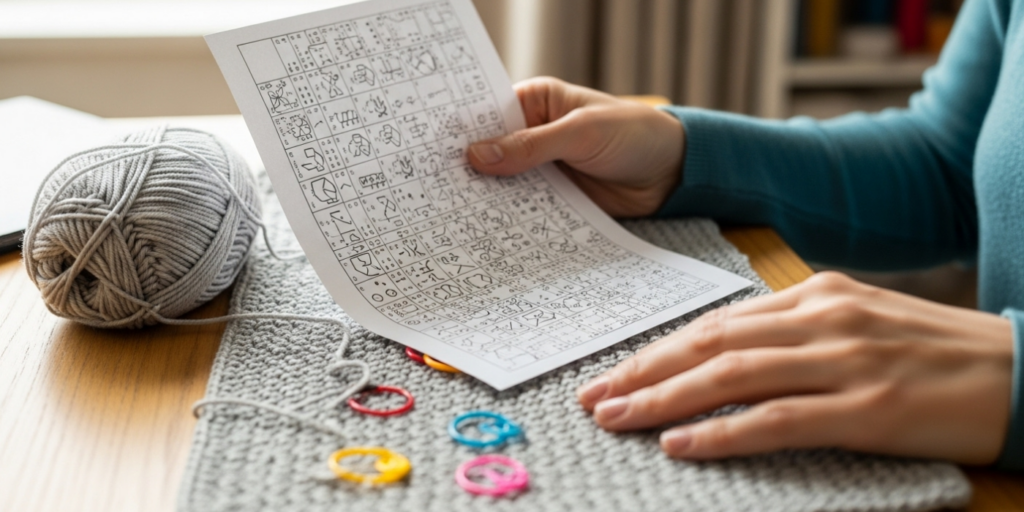
Before starting, read the entire pattern carefully. Identify the repeat unit—this is often enclosed in asterisks (*) or brackets [] in written instructions. Note the required foundation chain multiple; for example, “chain a multiple of 8 + 3” means the total chain should be divisible by 8 with 3 extra chains. Calculate your starting chain based on desired width. If the pattern specifies a gauge, make a swatch first to confirm your stitch count per inch matches the designer’s. Pay attention to special notes about whether the turning chain counts as a stitch, as this varies by pattern. For circular projects, determine if repeats are worked continuously or in joined rounds, as this affects stitch alignment. Understanding the pattern’s architecture prevents mid-project confusion and saves significant time.
Step 2: Create a Foundation Chain with Correct Multiple
Using your chosen hook and yarn, chain the calculated number. To avoid miscounting, place a stitch marker every 10 or 20 chains. After chaining, count twice to verify—first by sliding your finger along the bumps on the back of the chain, then by counting the V-shapes on the front. For patterns worked in rows, remember that the turning chain may or may not count as a stitch—check pattern notes meticulously. For rounds, join with a slip stitch carefully to avoid twisting; lay the chain flat on a table before joining to ensure no rotations occurred during chaining. If your count is off by one or two stitches, it’s better to restart the foundation chain than to force corrections later, as errors compound with each row.
Step 3: Work the First Repeat Unit
Begin working the stitches as instructed for the first repeat. After completing one full repeat, pause and count the stitches in that section to ensure accuracy. For example, if the repeat is “*sc, dc, tr; repeat from *”, count that you have exactly three stitches per repeat unit. Use a stitch marker to separate repeats if the pattern has multiple units per row. This visual break helps in tracking progress and catching errors early. Pay special attention to special stitches like clusters or popcorns that may consume multiple chains but produce one stitch—these often trip up beginners. Work slowly through the first repeat to establish muscle memory before accelerating.
Step 4: Continue with Subsequent Repeats
Repeat the designated sequence across the row or round. After each repeat, do a quick count or visual check—glance at the emerging pattern to confirm symmetry. For long rows, use a row counter to track how many repeats you’ve completed; click it after finishing each repeat unit. If the pattern includes increases or decreases within repeats, pay close attention to placement to maintain symmetry. For instance, in a shell stitch pattern, ensure each shell has identical stitch counts. When working in the round, move your beginning-of-round marker up with each new round to maintain orientation. If you lose count mid-row, don’t guess—count backward from your current position to the last verified point.
Step 5: Check Stitch Count at Row End
At the end of each row or round, count all stitches to confirm the total matches the expected count. Many patterns provide a stitch count for key rows; use this as a checkpoint. If counts are off, unravel back to the last correct point rather than forcing corrections, which can distort the fabric. Common end-of-row errors include working into the turning chain base incorrectly or skipping the final stitch. Place a marker in the first and last stitch of each row during early projects to create boundaries. For circular work, ensure your stitch count increases or decreases match the pattern’s specifications for each round—deviations here cause cupping or ruffling.
Step 6: Adjust for Shaping and Size Changes
When patterns require shaping (e.g., for sleeves or necklines), understand how increases/decreases integrate with repeats. Sometimes, you may need to work partial repeats at edges. Advanced tip: sketch a small chart to visualize how repeats align with shaping points. For example, if decreasing for a neckline, determine whether to decrease within the repeat or at the edges to maintain pattern integrity. When resizing garments, recalculate the foundation chain using your personal gauge swatch, then verify that the new count works with the pattern’s stitch multiple. Document all adjustments in a project journal for future reference.
Step 7: Maintain Consistency in Tension
Tension affects stitch size and count visibility. Practice even tension by relaxing your grip and taking breaks every 20 minutes to prevent hand fatigue. If tension varies, stitch counts may appear correct on paper but the fabric could pucker or stretch unevenly. Work a practice swatch focusing solely on tension before starting the main project. Notice how your stitches look when you’re relaxed versus tense—this self-awareness improves consistency. For long projects, periodically hold your work up to check for unintentional width changes that indicate tension drift.
Step 8: Document Your Process
Keep notes on any adjustments made, especially if customizing. This helps in replicating success or troubleshooting later. For designers, this documentation is crucial for pattern writing. Record your actual stitch counts per row, any deviations from the pattern, and how the fabric behaved. Photograph your swatches with a ruler for scale. This habit transforms mistakes into learning opportunities and builds a personal knowledge base that accelerates future projects. By following these steps meticulously, you’ll develop an intuitive sense for pattern repeats, reducing errors and enhancing project outcomes. Remember that mastery comes through mindful repetition—each project refines your ability to anticipate and manage repeats effortlessly.
Common Mistakes in Crochet Pattern Repeats and How to Avoid Them
Even experienced crocheters encounter pitfalls with pattern repeats and stitch counts. Recognizing common errors is the first step to prevention.
Mistake 1: Miscounting Foundation Chains
This often happens when chains are too tight or when counting while chaining. To avoid, chain loosely and count in segments with markers. Double-check before proceeding by counting both the front V’s and back bumps. Many crocheters find it helpful to count aloud or use a counter app that clicks with each chain.
Mistake 2: Forgetting the Turning Chain
In row-based patterns, the turning chain may count as the first stitch. Misunderstanding this leads to extra or missing stitches. Always verify pattern instructions on turning chains—some patterns explicitly state “turning chain does not count as stitch” while others incorporate it. When in doubt, work a test swatch to observe how the edge forms.
Mistake 3: Skipping Stitches at Edges
Edges can be tricky; it’s easy to miss the last stitch or work into the base of the turning chain incorrectly. Place a marker in the first and last stitch of each row to maintain boundaries. For double crochet rows, remember that the last stitch is often worked into the top of the turning chain from the previous row—a spot beginners frequently overlook.
Mistake 4: Inconsistent Tension
Varying tension alters stitch size, making counts accurate on paper but fabric distorted. Practice consistent tension through mindful crocheting and regular breaks. Work a tension swatch focusing solely on evenness before starting complex repeats. Notice how your stitches look when you’re relaxed versus tense—this self-awareness improves consistency.
Mistake 5: Misinterpreting Repeat Instructions
Patterns may say “repeat from * to *” but novices might repeat the entire sequence including setup stitches. Read carefully to identify the exact repeat unit. Highlight the repeat section in printed patterns with a colored pen. For digital patterns, copy the repeat instructions into a separate document for quick reference during repetitive sections.
Mistake 6: Not Checking Gauge
Ignoring gauge means stitch counts won’t translate to correct dimensions. Always swatch and adjust hook size if needed. Wash and block your swatch as you would the finished item, since some fibers change significantly after blocking. Measure gauge over 4 inches rather than 1 inch for greater accuracy.
Mistake 7: Rushing Through Complex Repeats
Lace or cable repeats require focus. Slow down, use markers, and count after each repeat section. For intricate patterns, work in good lighting and avoid distractions. Some crocheters find it helpful to whisper the repeat sequence aloud (“yarn over, insert hook, pull up loop”) to maintain concentration during complex maneuvers.
To avoid these, develop habits like counting stitches frequently, using markers liberally, and reviewing pattern notes before starting. When errors occur, don’t hesitate to frog (rip out) and restart—it’s better than a flawed finished item. Remember that even professional designers recount stitches multiple times per row during sample creation; accuracy is a practice, not an innate talent.
Advanced Tips for Crochet Pattern Repeats and Professional Insights
Drawing from years of experience in crochet design and instruction, several advanced strategies can elevate your mastery of pattern repeats.
Tip 1: Chart Your Repeats
For complex patterns, create a visual chart mapping out each stitch in the repeat. This clarifies the structure and helps spot errors quickly. Software like Stitch Fiddle or even graph paper works well. Color-code different stitch types for at-a-glance recognition during long sessions. Many professional designers maintain digital chart libraries that speed up pattern development and reduce calculation errors.
Tip 2: Understand Mathematical Multiples
Many patterns rely on stitch multiples for symmetry. Learn to calculate these multiples for customization. For instance, if a pattern requires a multiple of 6 + 2, you can adjust the foundation chain to fit any width by solving for n in 6n + 2. This mathematical approach transforms pattern adaptation from guesswork into precise engineering. Keep a reference sheet of common multiples (e.g., ripple afghans often use multiples of 14 + 3) for quick consultation.
Tip 3: Use Lifelines
In intricate lace or thread crochet, insert a lifeline (a contrasting thread through a row of stitches) periodically. If you make a mistake, you can rip back to the lifeline without losing all progress. For projects worked in the round, thread the lifeline through the front loop of each stitch at the end of a completed repeat section. This technique is indispensable for high-value projects where time investment is significant.
Tip 4: Practice with Swatches
Before committing to a large project, make a swatch that includes several repeats. This tests your understanding and reveals any tension or counting issues early. Work the swatch to at least 6 inches square to observe how repeats behave over distance. Block the swatch to see the final drape—many stitch patterns transform dramatically after blocking.
Tip 5: Study Vintage Patterns
Older patterns often have unique repeat structures with minimal written guidance. Analyzing them builds adaptability and deepens appreciation for crochet history. Start with 1940s or 1950s patterns that use concise language; deciphering their repeat logic sharpens problem-solving skills applicable to modern designs.
Tip 6: Collaborate with Testers
If designing patterns, have multiple testers work the repeats. Their feedback highlights ambiguities in instructions, ensuring clarity for end-users. Professional designers often maintain a “tester pool” with varying skill levels to catch issues beginners might encounter. Document tester feedback meticulously—it often reveals unstated assumptions in your instructions.
From working with crochet brands, I’ve found that professionals often keep a “repeat library”—a collection of swatches showcasing different repeat types. This resource speeds up design work and serves as a teaching tool. Remember, mastery comes from deliberate practice, not just repetition. Focus on understanding why repeats work the way they do, and you’ll innovate beyond existing patterns. Additionally, pay attention to how repeats interact with fabric direction; some patterns look different when worked flat versus in the round. Experimentation here can lead to unique designs. Also, consider the ergonomics of repeat work—using ergonomic hooks can reduce fatigue during long repeat sessions, maintaining accuracy where standard hooks might cause tension drift.
Real-World Examples of Crochet Pattern Repeats in Practice
Consider a hypothetical scenario: a crocheter named Maria is making a shawl from a pattern with a 12-stitch repeat lace motif. The pattern calls for a foundation chain of 145 stitches (multiple of 12 + 1). Maria chains 145 but, after the first row, counts only 144 stitches. She realizes she miscounted the foundation chain. By recounting and adding one chain, she corrects the error early, saving hours of work. This example underscores the importance of initial verification—what seemed like a minor counting slip would have caused the lace motifs to misalign progressively, ruining the shawl’s symmetry.
In a real-world business context, a small crochet brand launched a popular blanket pattern with a complex cable repeat. Initially, customers reported misalignment after several rows. The designer discovered that the written instructions were ambiguous about where the repeat started after increases. By revising the pattern to include a chart and clearer repeat markers—specifically noting “after increasing, begin repeat from second stitch of previous repeat”—customer satisfaction improved dramatically, and sales increased by 30% in the following quarter. This case highlights how attention to repeat details directly impacts commercial success and brand reputation.
Another example involves an intermediate crocheter adapting a vintage sweater pattern to a different yarn weight. The original pattern used worsted weight with a 10-stitch cable repeat. By making a gauge swatch with DK weight yarn, they determined their stitches per inch were 25% smaller. They recalculated the foundation chain using the formula: (desired width in inches × new gauge) adjusted to the nearest multiple of 10. After working a 12-inch swatch with the new count, they confirmed the cables maintained their definition despite the finer yarn. This demonstrates practical application of repeat knowledge for customization without distorting the design intent.
These examples illustrate that whether for personal projects or business, meticulous handling of pattern repeats prevents frustration and enhances outcomes. In colorwork like tapestry crochet, maintaining stitch counts across color changes is critical—a dropped stitch during a color switch can shift an entire geometric motif. Using stitch markers between color sections and counting after each color change prevents these errors. Such insights come from hands-on experience and are invaluable for achieving professional results that stand the test of time and use.
Customization and Adaptation Ideas for Crochet Pattern Repeats
Once you understand pattern repeats, customization becomes empowering. Here are practical ideas to adapt patterns creatively while maintaining structural integrity.
Adjusting Size: To resize a garment, calculate the required stitch multiple based on your gauge. For example, if a pattern has an 8-stitch repeat and you need 40 inches wide at 4 stitches per inch, you need 160 stitches. Since 160 ÷ 8 = 20, it works perfectly. If not divisible—say you need 42 inches (168 stitches)—168 ÷ 8 = 21, still perfect. But if your calculation yields 165 stitches, adjust to 168 (nearest multiple) and accept a 0.75-inch width difference, or modify edge stitches with a partial repeat. Always document your math for future reference.
Yarn Substitution: When changing yarn weight, recalculate the foundation chain using your swatch gauge. Ensure the new yarn’s drape complements the repeat structure; a stiff cotton might not suit a flowing lace repeat designed for wool. Test with a swatch that includes at least three full repeats to observe how the motif behaves. For instance, a bamboo blend might elongate lace repeats due to its drape, requiring slight stitch count adjustments to maintain intended proportions.
Modifying Repeats: Shorten or lengthen repeats for design variation. In a ripple afghan with a 14-stitch repeat (3 dc, ch 2, 3 dc), altering to 4 dc groups changes the wave amplitude. Work a swatch first to ensure the new repeat maintains fabric stability—too few stitches between peaks can cause curling. Similarly, in filet crochet, adjusting the number of blocks per repeat alters motif scale while preserving the grid structure.
Combining Patterns: Merge repeats from different patterns for unique effects. Ensure stitch multiples are compatible or adjust with filler stitches. For example, combining a 6-stitch shell repeat with a 4-stitch post-stitch repeat requires finding a common multiple (12 stitches) and designing transition stitches that blend the textures seamlessly. This advanced technique demands careful swatching but yields one-of-a-kind results.
Adding Personal Touches: Incorporate beads or surface crochet within repeat sections for embellishment without disrupting the count. For bead crochet, add beads to specific stitches in the repeat (e.g., every third double crochet) following the existing structure. Surface crochet motifs can overlay repeats if anchored at consistent points—like the base of each shell—to avoid distorting the underlying fabric.
Always document changes for future reference. Customization not only personalizes projects but also deepens understanding of crochet mechanics. For advanced customization, consider asymmetrical repeats for modern designs—intentionally varying repeat lengths creates organic, flowing effects. Or use mathematical sequences like Fibonacci to determine repeat lengths for naturally harmonious patterns. Such approaches require solid fundamentals but yield stunning results that showcase both technical skill and artistic vision. Remember, the key is to maintain the integrity of the repeat structure while innovating—test extensively before committing to large projects.
Care, Maintenance, and Best Practices for Projects with Pattern Repeats
Proper care ensures that your crochet projects maintain their stitch integrity over time. After completing an item, blocking is essential for patterns with repeats, as it evens out stitches and enhances motif definition. Use appropriate blocking methods based on fiber content—wet blocking for wool (soak 20 minutes, gently squeeze water, pin to shape), steam blocking for acrylics (hover iron without touching), or spray blocking for delicate lace. For projects with intricate repeats like cables or lace, pay special attention to aligning motifs during blocking—use rust-proof pins to secure each repeat section symmetrically. When washing, follow yarn care instructions meticulously; machine washing can stretch repeats out of alignment, especially in non-elastic fibers like cotton. Hand wash in cool water with mild detergent, gently pressing water through the fabric without wringing. Reshape while damp and dry flat on a towel, repositioning every hour until completely dry to maintain repeat symmetry.
For long-term maintenance, store items folded rather than hung to avoid gravity-induced stretching, especially for lace with delicate repeats. Use acid-free tissue paper between folds for heirloom pieces. Repair any dropped stitches promptly using a small hook to ladder back up—ignoring small errors can lead to unraveling that distorts entire repeat sections. In a business context, providing detailed care instructions with sold items demonstrates professionalism and extends product life. Include specifics like “hand wash cold, lay flat to dry” and “re-block annually to refresh lace motifs.” Additionally, best practices during creation—like consistent tension and accurate counting—reduce the need for extensive blocking. Remember that the beauty of pattern repeats lies in their precision; preserving that precision through thoughtful care honors both the craft and the time invested. For high-wear items like sweaters, reinforce stress points (underarms, cuffs) with tighter stitches during creation to prevent repeat distortion from friction. Educating customers on these aspects builds trust and encourages proper stewardship of handmade goods, ultimately enhancing brand reputation and customer loyalty.
Monetization Opportunities Through Crochet Pattern Repeat Expertise
For artisans and entrepreneurs, expertise in crochet pattern repeats opens several monetization avenues, all rooted in education and quality rather than aggressive sales tactics. Pattern designers who excel at explaining repeats and counts can command premium prices for their work. Create well-documented patterns that include multiple views of the repeat structure, troubleshooting sections for common counting errors, and video supplements demonstrating tricky sequences. Platforms like Etsy, Ravelry, and LoveCrafts cater to crocheters seeking reliable patterns, with bestsellers often featuring exceptional clarity around repeat mechanics. Bundle related patterns—such as a “Lace Repeat Collection” with varying difficulty levels—to increase average order value.
Teaching represents another strong opportunity. Develop online courses focused specifically on mastering repeats, segmented by skill level. A beginner course might cover counting techniques and simple repeats, while an advanced module could address mathematical customization and complex lace. Platforms like Teachable or Skillshare provide infrastructure, but building your own membership site fosters community and recurring revenue. In-person workshops at local yarn stores or craft festivals allow hands-on instruction where you can correct counting errors in real-time—a valuable service beginners appreciate. Many successful crochet educators supplement classes with printable cheat sheets on stitch multiples or repeat tracking templates.
Custom commissions leverage repeat expertise for personalized items. Clients often request resizing heirloom patterns or adapting designs to specific measurements—tasks requiring precise repeat calculation. Market this service to customers seeking meaningful gifts, emphasizing your technical accuracy. Content creation offers scalable income; a blog or YouTube channel dedicated to repeat mastery can attract audiences through search traffic for terms like “how to count crochet stitches” or “fixing pattern repeats.” Monetize ethically through Google AdSense (ensuring family-friendly content), affiliate links to quality tools like stitch counters, or sponsored content with yarn companies demonstrating their products in repeat-intensive projects.
Consulting services for emerging designers fill a niche need—many talented crocheters struggle with pattern writing clarity. Offer editing packages focused specifically on repeat instructions and stitch count verification. Subscription models like monthly “repeat challenge” boxes provide curated yarn and patterns emphasizing a specific repeat technique, targeting skill development. Crucially, monetization should prioritize value over hype. Avoid overpromising results; instead, position yourself as a reliable resource. For instance, a pattern bundle titled “Mastering Lace Repeats” with video support can command premium pricing due to its educational depth. This approach aligns with sustainable business models in the handmade sector. Additionally, collaborate with yarn companies for sponsored content where you demonstrate how their yarns perform in repeat-based projects—this generates income while building authentic partnerships. Remember, authenticity resonates; share real struggles and successes to connect with audiences. Monetization thrives when expertise is shared generously, fostering community growth alongside revenue.
Frequently Asked Questions (FAQ)
Q1: What exactly is a pattern repeat in crochet, and why does it matter?
A pattern repeat is a specific sequence of stitches that is duplicated multiple times across a row, round, or motif to create a consistent design structure. It matters because it allows crocheters to work large projects without memorizing every single stitch—once you master the repeat unit, you can focus on rhythm and flow. Repeats ensure visual consistency; without them, motifs would appear random and asymmetrical. For example, in a shell stitch pattern, the “shell” (typically 5 double crochets worked into one stitch) forms the repeat unit that creates the characteristic scalloped effect. Understanding repeats also enables customization—you can adjust project width by adding or removing repeat units while maintaining design integrity. From a business perspective, clear repeat instructions reduce customer support queries and returns, directly impacting profitability.
Q2: How do I calculate the correct foundation chain when a pattern says “multiple of X plus Y”?
First, identify your desired width and your gauge (stitches per inch from a swatch). Multiply width by gauge to get total stitches needed. Then solve the equation: total stitches = (multiple × n) + Y, where n is a whole number. For example, with a “multiple of 8 + 3” requirement and needing 80 stitches: 80 – 3 = 77; 77 ÷ 8 = 9.625. Round n to 10: (8 × 10) + 3 = 83 stitches. This gives you 83 chains—slightly wider than 80, but mathematically correct for the repeat structure. Always make a swatch with your calculated chain count to verify the actual width before proceeding. Remember that the “+ Y” stitches often account for turning chains or edge stitches that don’t belong to the repeat unit itself. When in doubt, err on the side of a few extra chains—you can adjust edges later more easily than adding width mid-project.
Q3: Why does my stitch count keep changing even when I carefully follow the pattern instructions?
Several subtle issues commonly cause drifting stitch counts. First, verify whether the turning chain counts as a stitch—many patterns omit this clarification. Second, check your tension at row beginnings and ends; tight tension can cause skipped stitches, while loose tension may create accidental yarn overs. Third, examine how you’re working into the turning chain base—some patterns require working into the very first stitch, others skip it. Fourth, in patterns with increases/decreases within repeats, ensure you’re placing them correctly relative to the repeat structure. Fifth, fiber choice matters: slippery yarns like silk encourage accidental stitch additions through unintentional yarn overs. To diagnose, count stitches after every row for three rows—if counts drift consistently, the issue is systemic (likely turning chain interpretation); if random, it’s tension-related. Place stitch markers at repeat boundaries to isolate where errors occur.
Q4: Can I successfully substitute yarn in a pattern with complex repeats without ruining the design?
Yes, but success requires methodical adaptation rather than direct substitution. First, make a generous swatch (at least 6 inches square) with your substitute yarn using the recommended hook size. Measure your gauge and compare to the pattern’s gauge. If significantly different, adjust hook size until gauges match as closely as possible. Next, recalculate the foundation chain using your personal gauge and the pattern’s stitch multiple. Crucially, work a swatch that includes at least three full repeats of the pattern motif—some repeats (like cables) rely on specific yarn properties for definition. A lofty wool might obscure cable twists that show beautifully in smooth cotton. If the motif loses definition, consider whether the substitution is appropriate or if a different yarn within the same weight category would perform better. Always block your test swatch to see the final drape—many repeats transform after blocking. Document all adjustments so you can replicate success or troubleshoot issues.
Q5: What’s the most efficient way to fix a miscounted repeat discovered several rows later?
The repair method depends on the error’s nature and project value. For minor errors (one or two stitches off) in non-critical areas, you may be able to “steek” the fabric—carefully snip a stitch and rework a small section—but this requires advanced skill. For most situations, controlled unraveling is safest. Insert a lifeline (contrasting thread) through the row below the error if possible, then carefully frog back to that point. If no lifeline exists, use a smaller hook to “tink” (unknit) stitch by stitch, which gives more control than ripping. For lace patterns where errors distort multiple rows, sometimes it’s faster to frog completely back to the last perfect repeat rather than attempting partial repairs that leave visible distortions. Prevention is always preferable: develop the habit of counting stitches after every repeat section during initial creation. Professional designers often place removable stitch markers at the end of each repeat row specifically to enable easy error correction without total unraveling.
Q6: How can I track complex repeats without losing my place, especially in large projects?
Effective tracking combines physical tools and systematic habits. Use different colored stitch markers to denote repeat boundaries—place one color at the start of each repeat unit and another at the end. For patterns with multiple repeat types (e.g., a main repeat plus edge repeats), assign unique markers to each section. Pair this with a row counter that you click after completing each full repeat sequence. For written patterns, photocopy the repeat instructions and highlight the current step with a highlighter, advancing the highlight as you work. Digital solutions include apps like Crochet Tracker that allow tapping to advance through repeat steps. Some crocheters find auditory tracking helpful—whispering the repeat sequence aloud creates muscle memory and catches skipped steps. For extremely complex repeats like mathematical lace, create a paper chart with checkboxes for each stitch in the repeat, checking off as you work. The key is redundancy: combine at least two tracking methods (e.g., markers plus verbal counting) to catch errors before they compound. Experienced crocheters often develop personalized systems through trial and error—what matters is consistency in application.
Conclusion
Mastering crochet pattern repeats and stitch counts is a journey that transforms your crochet from hobby to artistry. This guide has equipped you with foundational knowledge, practical steps, and professional insights to navigate repeats with confidence. Remember that accuracy stems from mindfulness—counting stitches frequently, checking gauge meticulously, and understanding pattern structures before beginning. Whether you’re creating for personal enjoyment or building a handmade business, these skills reduce frustration and elevate quality to professional standards. Embrace mistakes as valuable learning opportunities; even the most experienced designers recount stitches multiple times per row during sample creation. As you practice consistently, you’ll develop an intuitive feel for repeats that allows creativity to flourish within a framework of precision. Share your knowledge generously with fellow crocheters to strengthen our community—explaining a repeat concept to a beginner often deepens your own understanding. Now, select a pattern that challenges your current skills, gather your tools, and apply these principles with patience. Your dedication to mastering the fundamentals will manifest in projects that delight both you and those who experience your work. The rhythm of repeats awaits—happy crocheting.

Anne Williams is a passionate crochet artist who finds purpose and expression through yarn and handmade creations. Driven by creativity and a love for the art of crochet, she transforms ideas into unique pieces, blending patience, care, and authenticity. Always eager to explore new techniques and inspire others, Anne believes crochet is a way to slow down, tell stories, and create beauty with meaning.